
The Last Mile
How a Reluctant Runner Discovered Her Own Finish Line

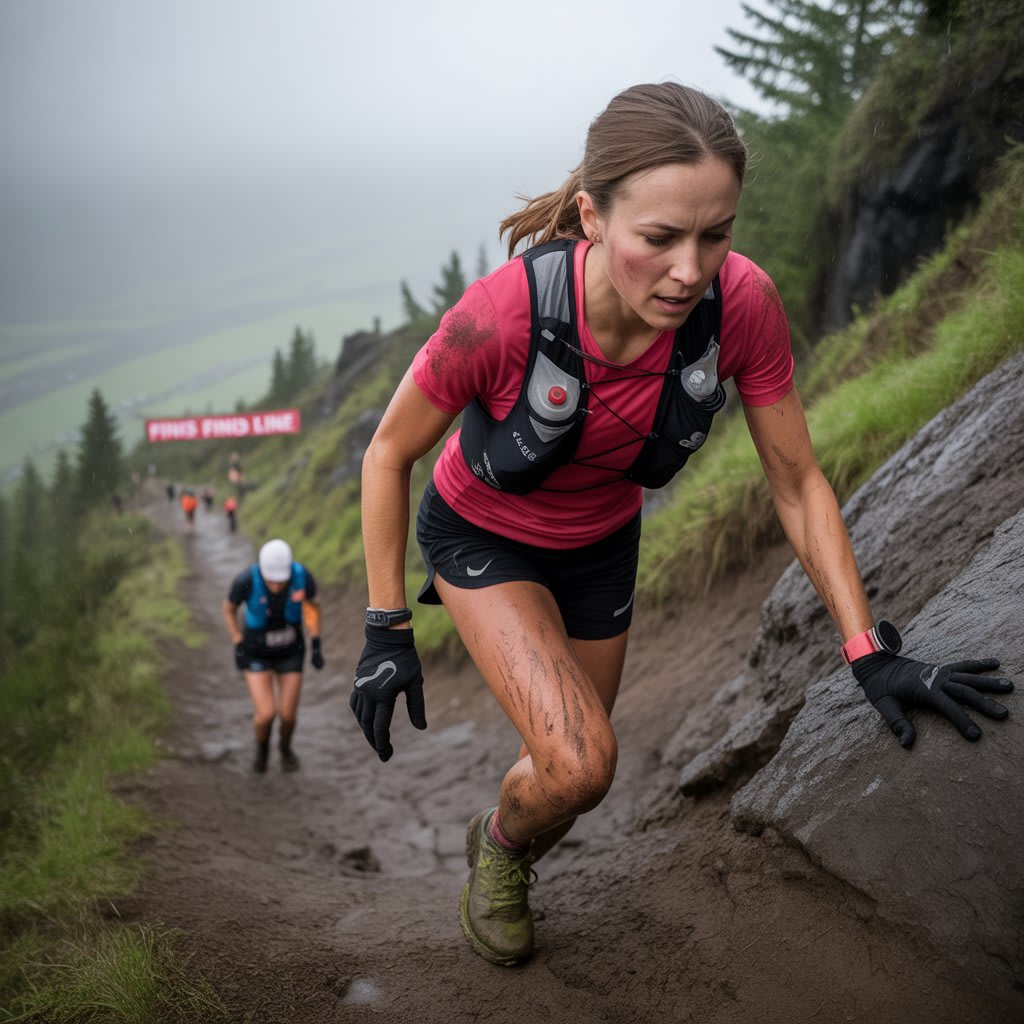
The morning was colder than expected for late spring, and Emma Hayes stood at the edge of the trail, staring down the winding dirt path that disappeared into the mist. She tightened her ponytail, adjusted her running shoes, and told herself for the fifth time that she didn’t have to do this.
No one was making her run the "Last Mile Challenge"—a grueling, hilly ten-kilometer race that ended with a notoriously steep climb. She had signed up six months ago, fueled by a mix of impulsive optimism and the desperate need for change.
Back then, Emma had been stuck—career stalled, friendships drifting, health declining. Her days were predictable: wake up, drag herself to work, survive meetings, collapse in front of the TV. She had read somewhere that physical challenges could reignite mental resilience. Running seemed like the cheapest option.
So she downloaded a couch-to-10K plan and started. The first day nearly broke her. She made it three minutes before her lungs felt like they were on fire and her legs turned to lead.
But she went back. And again. And again. Some days it felt good—other days, it felt impossible. She wanted to quit every week. Still, something about putting one foot in front of the other gave her a strange, stubborn satisfaction.
The Road to Race Day
By week twelve, she could run five miles without stopping. Her pace wasn’t impressive, but her mindset had shifted. She began seeing parallels between running and her life: the slow accumulation of effort, the inevitability of setbacks, the way small wins built momentum.
Then, three weeks before the race, she sprained her ankle on an uneven sidewalk. The injury wasn’t severe, but the doctor warned her: “If you push too hard, you could be out for months.”
She considered withdrawing. The idea of limping across the finish line—if she even made it—was humiliating. But another thought gnawed at her: maybe the point wasn’t to run it perfectly, but to run it anyway.
So she adapted. Shorter distances. Slower paces. Ice packs and stretches every evening. She hated it, but she refused to stop.
Race Day
Now, as she waited for the starting horn, she glanced at the other runners—sleek, fit, and brimming with energy. Compared to them, she felt like an imposter.
The horn blasted. She moved forward, swallowed by the crowd. For the first mile, she kept her pace steady, ignoring the temptation to sprint. She reminded herself: Run your race, not theirs.
By mile four, her ankle ached, and the mist had turned to a steady drizzle. Mud clung to her shoes. Her legs screamed.
When she reached the base of the final hill—the infamous "Last Mile"—she saw several runners already walking. The incline looked like a cruel joke, steep and endless.
The Climb
Every step was agony. Her breath came in sharp bursts. She told herself she’d walk for just ten seconds, but the moment she slowed, a voice in her head whispered, This is where you stop.
She thought about all the other times she had quit—projects abandoned halfway, fitness goals discarded after a bad week, friendships neglected until they faded. The hill in front of her became more than a slope of dirt—it became every unfinished chapter of her life.
Something shifted.
She straightened her back and said aloud, “Not this time.”
One step. Then another. The pain didn’t go away, but it became background noise.
The Finish
When the hill finally leveled, the finish line appeared—bright banners fluttering, a small crowd cheering. She wasn’t first. She wasn’t last. She was just… there, crossing it.
And for reasons she couldn’t explain, tears blurred her vision. She hadn’t run her fastest race. She hadn’t run her best race. But she had run it—despite the ankle, despite the doubt, despite everything.
Later, sitting on the damp grass with her medal around her neck, she realized the race was never about winning. It was about proving to herself that she could keep going, even when every cell in her body screamed to stop.
In the days that followed, Emma noticed a change—not in her circumstances, but in her approach. At work, she volunteered for a tough project. At home, she dusted off an unfinished novel and began writing again. The lesson from the race echoed in everything she did: One step at a time. Don’t stop on the hill.
Epilogue
A year later, Emma stood at the same starting line for the same race—this time without injury, without fear, and without the heavy cloud of doubt.
When she reached the Last Mile, she smiled at the hill. And she ran.
About the Creator
AFTAB KHAN
SUBSCRIBE ME AND READ STORY
Storyteller at heart, writing to inspire, inform, and spark conversation. Exploring ideas one word at a time.
Writing truths, weaving dreams — one story at a time.
From imagination to reality
Keep reading
More stories from AFTAB KHAN and writers in Motivation and other communities.
The Bridge Between Us
In the quiet town of Eldenwood, nestled between silver birch forests and winding brooks, there lived two best friends: Lena and Milo. They had known each other since they were five, first meeting in a sandbox behind the town's little library. Lena was bold, always climbing trees and asking impossible questions. Milo was quiet, always drawing, observing, and finding meaning in the smallest details.
By AFTAB KHAN6 months ago in Motivation
One Hard Thing
Stop me if you’ve heard this one before: You have the number, you know your schedule- you’ve even picked out the perfect day and time to make this appointment. Shoot, you’ve even picked out alternative days and times just in case their schedules can’t accommodate you!
By Taylor Rigsby15 days ago in Motivation
The Runner Who Couldn’t Stop
Daniel had always been an average athlete. In school, he never won races, never stood out, and often finished last. People would tell him, jokingly or seriously, that he didn’t have what it takes to be fast or strong. At first, Daniel believed them. He trained reluctantly, gave up easily, and avoided competitions where he might be embarrassed. But one day, something changed. He realized it wasn’t about winning. It was about proving to himself that he could go further than he thought. That day, he started running—not to beat anyone else, but to challenge himself.
By Sudais Zakwan4 days ago in Motivation




Comments
There are no comments for this story
Be the first to respond and start the conversation.