science
Study the science of animals to get a deeper understanding of your pet's brain, body and behavior.
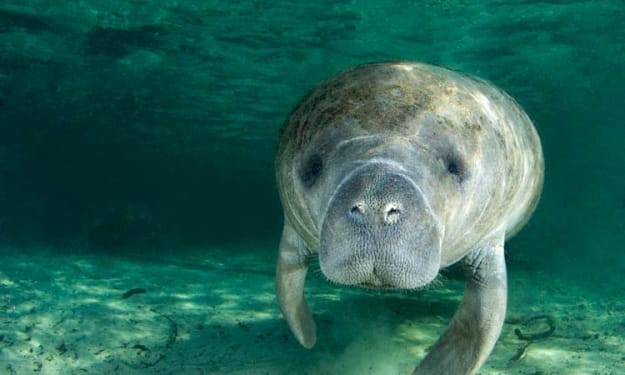
When the Water Turns Red: How Red Tide Affects Florida’s Marine Animals
Karenia brevis is a type of dinoflagellate that is known to produce toxins that can accumulate in marine organisms like shellfish, which can lead to poisoning when eaten by other animals. It’s adapted to get nutrients on the West Florida Shelf Oligotrophic where it feeds on copepods and their feces. In order for it to thrive, it also needs low light and an upwelling to initiate a bloom. The bloom occurs in four stages which include initiation, growth, maintenance and termination. Yet researchers have yet to determine which stage could serve as a primary factor to a bloom maintenance since there are multiple sources that are involved in the process. What is known, though, is that once a bloom begins, a combination of winds and current push the newly formed red tide to shore. As a result, the dangers it can have on animals begins to arise when K. brevis gets ingested because after all, they do produce a neurotoxin that bioaccumulate up the food chain of Florida’s marine ecosystem. This toxin can also be airborne when the cell breaks up from wave activity.
By Jenna Deedy7 years ago in Petlife
The Southern Resident Orcas Need Our Help
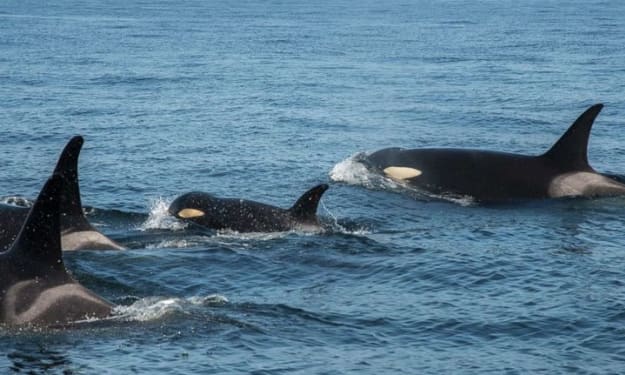
For 17 days, a 20-year-old adult female orca named Tahlequah, also known as J35, carried her dead newborn calf in a tragic effort to continue caring for the calf despite it having to have died just shortly after birth. Around the same time, her cousin, J50, also known as Scarlet, is grossly underweight as the result of possible malnutrition from the lack of the orca's primary food source, chinook salmon. Currently, as of now, there are ongoing efforts to rescue Scarlet from becoming another casualty by using boats to deliver her live salmon through a test feeder while collecting breath samples to monitor her health. Also, researchers also plan to use the live fish to provide medication to the sickly three-year-old orca even though there is no guarantee that she will eat live fish, but at the same time, the fact that scientists are making an effort to feed a wild orca is very unprecedented.
By Jenna Deedy7 years ago in Petlife
Shark Attacks
According to the International Shark Attack File, there are less than 1000 attacks a year by sharks on humans and only between 10 and 15 of these results in death. To put this into perspective, 1,000 are killed by crocodiles, 1,500 by tigers, leopards and lions and 60,000 from being bitten by a snake. According to the Florida Museum of Natural History, people kill between 20 and 30 million sharks a year in sport and commercial fishing, putting some species of shark on the endangered list.
By Clare Scanlan9 years ago in Petlife
Largest Creatures in the Sea
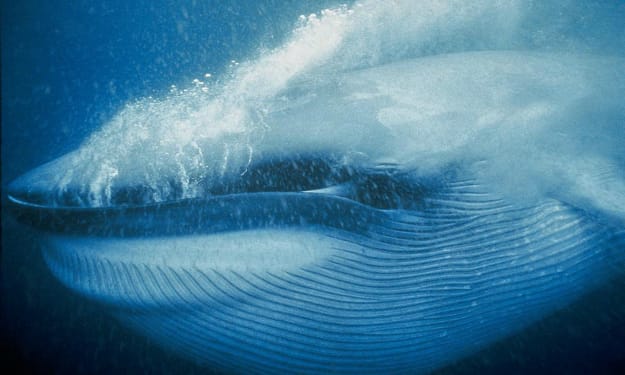
The ocean is absolutely packed with animals of all shapes and sizes. From the smallest plankton to the largest whale, the animals in the ocean show an amazing diversity in size, shape, and lifestyle. This diversity makes them so fascinating to study.
By Clare Scanlan9 years ago in Petlife
Which Animals Can Do Math?
In the late 19th Century, German math teacher Wilhelm von Osten became convinced that animals could do math. To prove this, he took a horse, and taught it to solve basic math equations by pawing the ground with its hooves to represent numbers. One stroke–one. Two strokes–two. Von Osten would take the horse, named Clever Hans, from town to town to tell it math equations, which it would solve to the public's amazement. It turned out, though, that, unbeknownst to von Osten, Clever Hans didn't know math. He merely pawed the ground until his master looked overjoyed, and knew then that he had done his job.
By Rachel G. David9 years ago in Petlife