how to
How to cope with your emotions, maintain mental health, deal with life's stressors and help others do the same.
Decoding Gaslighting
In a world where narcissism thrives, certain terms hold the power to unravel the intricacies of our relationships. Among them, "gaslighting" has gained prominence; its significance often elusive. In this exploration, we delve into gaslighting – its origins, manifestations, and the profound impact it has on our sense of reality.
By Judith Okech3 years ago in Psyche
Mindfulness Techniques for Managing Anxiety and Depression
Anxiety and depression are two very common mental health issues that affect millions of people around the world. These conditions can have a significant impact on a person's daily life, making it difficult to function and enjoy activities.
By Richard Bailey3 years ago in Psyche
"How to make peace with the past"
Enough of the past! It's time to return to the present and start building your future. Sometimes, the local spacetime throws unresolved situations at us that have been locked away for years. Other times, past events have taken root in our memories or subconscious, hindering us from moving forward. As you, my readers, have noticed, I've been digging into my past for quite some time. I began writing again when fragments of clarity started linking my present and past selves.
By Elle Vihman3 years ago in Psyche
Breaking the Stigma: How to Talk About Mental Health with Your Loved Ones
Mental health is a topic that is often overlooked or stigmatized in society. However, it is crucial to have open and honest conversations about mental health in order to promote overall well-being and break the stigma surrounding mental health issues.
By Richard Bailey3 years ago in Psyche
Cracking the Narcissistic Code: The Journey to Empowerment and Clarity
Today, I'm here to reveal a truth that might seem a tad. Once the narcissist realizes that you've cracked their code, things might take an unexpected turn. So, let's dissect this revelation and lay out the implications for you.
By Judith Okech3 years ago in Psyche
4 Gaslighting Techniques That Erode Your Self-Worth
Gaslighting is a subtle yet severe form of psychological manipulation. It is used to dominate or control another person. Through gaslighting, an abuser can damage another’s self-worth. This is done by undermining their confidence, distorting their sense of reality, and making them doubt themselves. Gaslighting targets an individual's perception of themselves. This makes them question their thoughts, emotions, and memories.
By Trust Mental Health3 years ago in Psyche
Unveiling the Hidden Treasures: Exploring the Potential of Rainforests in Curing Diseases.
Rainforests, often referred to as the Earth's lungs, are some of the most diverse and complex ecosystems on the planet. These lush and vibrant habitats are not only home to a rich variety of flora and fauna but also hold the promise of untold wonders for humanity. Among the myriad of possibilities, one of the most captivating ideas is the existence of herbs within rainforests that have the potential to cure various diseases. While this notion has sparked excitement and curiosity, it also raises ethical and environmental concerns. This essay delves into the possibility of rainforests containing herbs that could cure diseases, exploring the scientific basis, cultural knowledge, conservation challenges, and the potential for new medical discoveries.
By Armando Rios3 years ago in Psyche
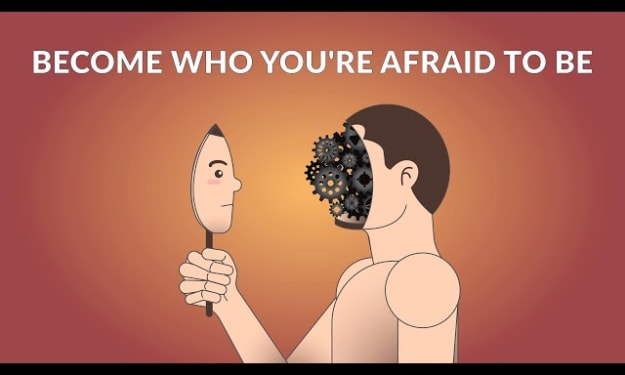
Become who you are Afraid to be.
Most people are afraid to fully be themselves. They’re afraid to embrace the parts of themselves that might be regarded as unacceptable, because embracing these unacceptable parts makes them feel uncomfortable. So to escape this uncomfortableness, they divide themselves into two halves: conscious and unconscious. In the conscious-half, they construct an ideal image of themselves: an image formed out of the bits and pieces of their past that they deem as good and acceptable. And as a result, in the unconscious-half, they repress the parts of themselves that they view as bad and unacceptable. In Jungian psychology, this repressed part of the personality is called /The Shadow/. And unless The Shadow is integrated into the personality, a person can never reach their fullest potential. Instead, one will always remain incomplete, fractured, and partial—living a life of regret rather than the full life that could have been. Imagine, for example, that I’ve solved a few equations and convinced myself that I’m a great mathematician. I might meet a few friends, and they tell me that they have a maths club. They gather every weekend and try to have a crack at maths most difficult problems. This scares me, because if I join, I’ll no longer get to be the ‘great mathematician’ that I’ve convinced myself I am. Instead, I’ll be a concrete person with actual strengths and weaknesses. And in this scenario, there are two possible actions I can take. The first action is to run from my shadow and let it grow. I refuse to join the maths club and realize my own weaknesses as a mathematician. I get to cling to the ideal image of myself as a great mathematician, but as a result, I lose the opportunity to actually become one. The second action is to come into contact with my shadow and integrate it. I join the maths club and realize that I’m not the great mathematician that I thought I was. In the short term, this hurts. I discover that I’m not very good at geometry, but also that I excel in differential equations. I become measured with my colleagues. I have an actual place and rank among other mathematicians. In reality, I realize I’m not the great mathematician I thought I was, but now I open up the possibility of actually becoming one. I can actually improve my skills and rank. In the long run, this ends up being the best decision I’ve ever made. See, in a way, we often prefer to be pure potential. We convince ourselves we /could be/ whatever we want to be, but don’t actively work to /actually/ be something. We just comfort ourselves with the idea that we could be something if we wanted to. This is because when we work towards something, we start feeling our weight in the world. We’re measured and ranked. We’re quantified and actual. And this actual reality is often less pleasurable to live in than our ideal fantasy. But it’s real, not a fantasy. And reality can be improved, but a life of imagination always ends in tragedy. The path to self-improvement starts with self-acceptance. Only by embracing and integrating our shadow, by accepting the ugly parts of ourselves, by becoming who we’re afraid to be, can we reach our fullest potential. But if we reject our shadow, if we pick and choose the parts of our past, personality, and behaviour that we like and repress the parts of ourselves we fear, we become incomplete and partial. And instead of living a full, whole life, we live one full of regrets. But it’s up to you to decide: in Jungian terms, will you embrace your shadow or reject it? Would you rather fail in actuality or succeed in mere hypotheticals?
By Ash Martin3 years ago in Psyche
Overcoming Anxiety: Personal Stories Of Triumph
Anxiety, often characterized by a relentless cycle of worry and fear, can be an overwhelming experience that significantly impacts one's quality of life. However, amidst the struggles, there are inspiring tales of individuals who have conquered anxiety and emerged stronger than ever before. These personal stories of triumph serve as beacons of hope for those who find themselves trapped in the grip of anxiety.
By Judith Akabs3 years ago in Psyche
Techniques For Inner Peace
In our fast-paced and increasingly chaotic world, the pursuit of inner peace has become more crucial than ever. Mindfulness, a practice rooted in ancient traditions, has gained significant popularity in recent years as a potent tool for achieving tranquility and balance amidst the demands of modern life. This exploration delves into the techniques of mindfulness, shedding light on how they can be harnessed to cultivate inner peace.
By Judith Akabs3 years ago in Psyche