
Goldman Raises Q4 Oil Price Outlook on Lower OECD Stocks
Declining OECD crude inventories tighten global supply, prompting Goldman Sachs to project stronger oil prices in the fourth quarter.
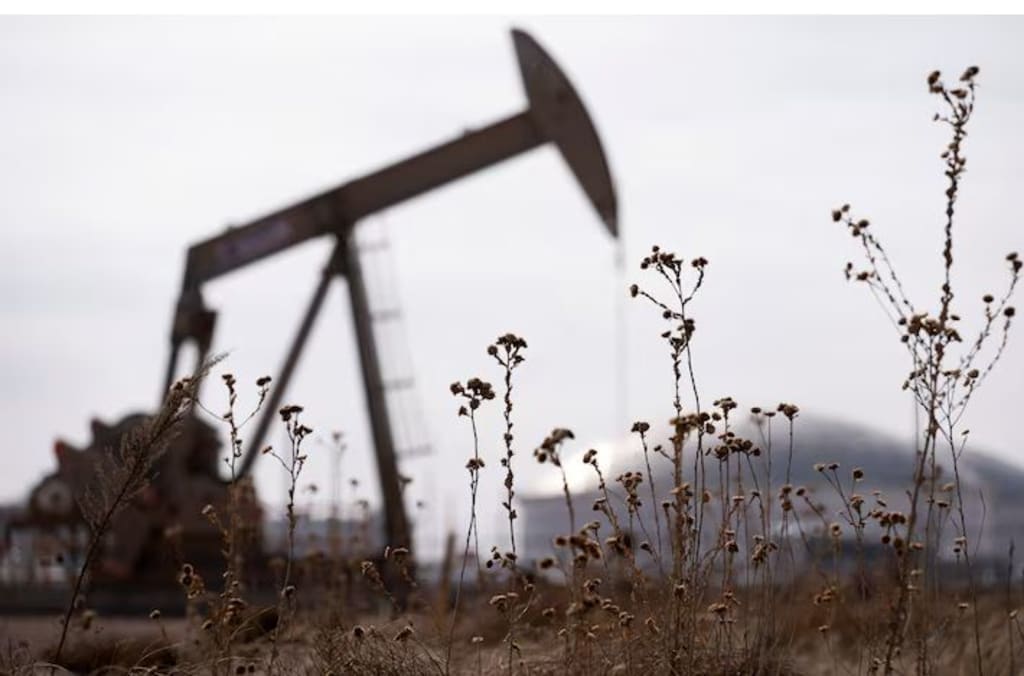
Global oil markets are once again in the spotlight after Goldman Sachs revised its fourth-quarter oil price outlook upward, citing declining crude inventories across advanced economies. The investment bank’s latest forecast reflects tightening supply conditions within member countries of the Organisation for Economic Co‑operation and Development (OECD), a key benchmark for measuring global energy stockpiles.
The revision highlights how structural shifts in supply, combined with resilient demand, are reshaping the oil market narrative heading into the final months of the year.
Why OECD Inventories Matter
OECD oil inventories are closely watched by traders, policymakers, and analysts because they provide a clear snapshot of supply availability in major consuming economies such as the United States, Europe, and parts of Asia. When these inventories decline, markets often interpret the trend as a sign that demand is outpacing supply — a bullish signal for prices.
Goldman Sachs noted that recent data shows stock levels falling below historical averages. This drop is partly attributed to production discipline from major exporters, refinery demand, and seasonal consumption trends. Lower inventories leave less buffer against supply disruptions, making prices more sensitive to geopolitical events or unexpected demand spikes.
In simple terms, when storage tanks hold less crude, the market becomes tighter — and tighter markets usually push prices higher.
The Bank’s Updated Price Outlook
Goldman Sachs’ new forecast suggests that oil prices could trend higher in the fourth quarter compared with earlier expectations. Analysts pointed to a combination of declining OECD stocks, steady global demand growth, and supply constraints from key producers.
The bank expects benchmark crude prices to remain supported even if economic growth slows modestly. This reflects a broader shift in market thinking: oil demand has proven more resilient than many analysts predicted, especially in transportation, aviation, and petrochemicals.
The updated outlook also assumes that production increases will remain gradual rather than aggressive, preventing oversupply.
Supply Discipline From Producers
One of the main drivers behind tightening inventories has been supply management from exporting nations, particularly those aligned with OPEC and its partners. Production curbs implemented over the past year have reduced the amount of crude reaching global markets.
These cuts were initially designed to stabilize prices amid economic uncertainty, but they have had a secondary effect: drawing down inventories faster than expected.
Goldman Sachs believes that continued discipline from producers could keep the market undersupplied through the end of the year. Even small disruptions — such as weather events, pipeline issues, or geopolitical tensions — could amplify price movements in this environment.
Demand Remains Strong
Despite concerns about global growth, oil consumption has held up well. Travel activity remains robust, industrial demand is stable, and emerging markets continue to expand energy use.
Seasonal factors also play a role. The fourth quarter often sees increased heating fuel demand in colder regions, adding another layer of support to prices. Meanwhile, refinery maintenance cycles can temporarily reduce product supply, tightening markets further.
Goldman Sachs’ analysis suggests that demand growth does not need to be explosive to push prices higher — it only needs to exceed supply in a market with already low inventories.
The Role of Geopolitics
Energy markets are highly sensitive to geopolitical developments. Conflicts, sanctions, and trade tensions can disrupt supply chains or shift production patterns quickly.
With OECD inventories already declining, geopolitical risks carry greater weight. Even the possibility of disruption can lead traders to price in a risk premium.
Goldman Sachs highlighted that the market’s reduced inventory cushion means price volatility could increase. In other words, oil prices may react more sharply to headlines than they would in a well-supplied environment.
What This Means for Consumers and Businesses
Higher oil price expectations have ripple effects across the economy. Fuel costs influence transportation, manufacturing, and consumer spending. Airlines, logistics companies, and heavy industry are particularly sensitive to energy price changes.
For households, sustained increases in oil prices can translate into higher gasoline and heating costs. For central banks, rising energy prices can complicate inflation outlooks and monetary policy decisions.
Businesses may respond by hedging fuel costs, adjusting pricing strategies, or accelerating investments in efficiency and alternative energy sources.
Market Risks to the Forecast
While Goldman Sachs’ outlook is bullish, it is not without risks. A sharper-than-expected economic slowdown could weaken demand and rebuild inventories. Similarly, unexpected production increases from major exporters or non-OPEC producers could ease supply constraints.
Technological shifts and policy changes also remain long-term variables. The global push toward energy transition introduces uncertainty about future oil demand growth, even as near-term consumption remains strong.
Weather events, refinery outages, and currency fluctuations can further influence price dynamics.
The Bigger Picture: Structural Tightness
Goldman Sachs’ revised forecast reflects a broader theme emerging in energy markets — structural tightness. Years of underinvestment in upstream production, combined with disciplined supply management, have reduced the margin for error.
This does not mean prices will rise indefinitely, but it suggests that the market may remain more sensitive to supply-demand imbalances than in the past decade.
Lower OECD inventories are a visible indicator of that shift.
Conclusion
The decision by Goldman Sachs to raise its fourth-quarter oil price outlook underscores how quickly market fundamentals can change. Declining OECD inventories, steady demand, and controlled supply have created conditions that favor higher prices.
While uncertainties remain — from economic growth to geopolitics — the current trajectory points toward a tighter market heading into year-end. For investors, businesses, and policymakers, the message is clear: inventory levels matter, and when they fall, oil markets rarely stay quiet.
As the fourth quarter approaches, all eyes will remain on stockpile data, producer decisions, and global demand trends. If inventories continue to decline, Goldman Sachs’ bullish outlook may prove not just justified, but conservative.
About the Creator
A Gathering of Evil Bosses
“I’m the queen of chin jutting while I smooth my hair, attacking, insulting, and deflecting to protect my appointer.” “Oh, please, Blondi, my hair is curled, highlighted, and longer than yours. I feature television commercials telling immigrants that we will give them a free plane ride home, and if they voluntarily turn themselves in, they will be allowed to legally apply for re-entry. It runs everywhere, and I look good in it! You can’t compete because of your blond hair. Mine is nicer, and my lips are prettier than yours.”
By Andrea Corwin 6 days ago in The Swamp
SHEESH War Incoming? Trump Warns Iran "Bad Things Will Happen" If They Fail To Make A Meaningful Deal!
Beyond all his ramblings and empty rhetoric, President Donald Trump needs to send a clear message. It needs to be an unmitigated announcement to the Iranian regime and the Supreme Leader that unless they remove themselves from power, the full might of the United States Armed Forces will rain down on them.
By Skyler Saunders4 days ago in The Swamp
It's 2026. Songs Turning 10 This Year
In 2016, we saw the rise of short form videos and what would lead to the birth of TikTok. We cannot forget the Snapchat filters no matter how cringe worthy some of them might have been. It was also the year in which the hit series Stranger Things debuted.
By Jasmine Aguilar2 days ago in Beat




Comments
There are no comments for this story
Be the first to respond and start the conversation.