history
Past politicians, legislation and political movements have changed the course of history in ways both big and small. Welcome to our blast to the past.
“After the End: One Man’s Journey to Rebuild Humanity”
The film begins with a man named Ash, who lives in the middle of a forest. He is a biologist and, due to his research, has been living far away from the city in the wilderness. One day, during his research, he is bitten by a venomous snake in the forest. He panics immediately, and at that moment his phone falls to the ground. Now he cannot call anyone for help. He tries to extract the venom himself and even cuts his own hand, but it has no effect. Even when he goes home and tries to cut his hand again, it is too late. The venom has already started spreading through his body, and he begins experiencing strange hallucinations. He remains in this state for several days. One day, some scientists arrive to take him away. He is somewhat conscious. He is alive, but his body has no strength. He musters the courage to try to call out to them, but no sound comes out. The scientists, assuming he is not there, leave. The scene cuts to a few days later. The cut on his hand has expelled most of the venom, and the small amount that had reached his brain is now healing. He only experiences mild hallucinations. Upon regaining consciousness, he immediately decides to go to a city hospital. He cleans his car and sets off toward the city. However, he notices something strange: there are no cars on the roads. When he reaches the city, there is no activity. He does not see a single living person. All the buildings are empty. Seeing this, he panics. A pandemic has broken out here. This pandemic is so deadly that it wipes out the entire population in just a few days. Being a biologist, Ash understands that because he had been isolated from the population for several days, the disease could not infect him, and he survived. Now the entire population has been wiped out — there is no government, no authority, and no owner of anything. Ash immediately thinks of his parents. Driving home, he sees that his parents have been dead for several days, and their bodies are in a terrible state of decay. Yet, he gathers courage and digs a grave outside his house to bury them. After that, he surveys the entire city, but there are no other survivors. Thinking this through, he decides to travel to another city and plans to go to Las Vegas. Taking some essential supplies and a gun, he sets off. However, the bridge to Las Vegas is sealed. He becomes very angry and chooses a longer route instead. When he finally reaches Las Vegas, everyone there has also died. Malls, large hotels, casinos — all are empty. Exhausted, he goes into a hotel. He spends the night there, enjoying expensive things because now everything is free for him. He does not expect to meet anyone else, but the next night he encounters two people. They, too, have survived the disease. The girl tells a sorrowful story, saying she watched her family die over a video call and now has no hope left to live. The man also wants to die, as living in such a lonely world seems impossible for him. That night, they stay with Ash, but by morning, he senses danger in their intentions. The man has a gun and wants to make the deaths of all three of them easy. But Ash wants to live, so he gets up and leaves. Behind him, he hears gunshots — the two have committed suicide. This event breaks Ash even more. Now, he realizes that he is completely alone in the world. Driving at high speed, he returns home. On the way, a dog crosses in front of his car. The dog is also completely alone, just like Ash. He takes the dog with him, finding a new reason to live. Ash begins a new life. He starts reading survival books. There is no shortage of food or drink, and there is no need to earn money anymore. He works every day and roams the town, hoping to find another survivor, but each day he returns disappointed. One day, while standing by a window drinking tea with his dog, it suddenly starts barking. He realizes that there is someone nearby. Smoke rises from a distant house, suggesting the presence of a human. He immediately takes his car and heads toward the house. Fortunately, there is a girl there. She is scared upon seeing Ash, but he reassures her that he means no harm and that he is also alone, searching for other survivors. Hearing this, the girl allows him into her house. Her name is Emma. Through their conversation, it becomes clear that nearly a year has passed since the pandemic, and neither Ash nor Emma has seen any other survivors in all that time. They are very happy to have found another human, as being alone has been extremely difficult, and they were on the verge of depression.
By Filmon Ke Raaz | Movie Mysteries Explained26 days ago in The Swamp
Japan Nuclear Agency Worker Loses Phone with Confidential Data in China. AI-Generated.
In a surprising international security incident, an employee of Japan’s Nuclear Regulation Authority (NRA) lost a work-issued smartphone containing confidential information while in China last year. The loss has triggered concerns over information security practices within Japan’s nuclear watchdog and prompted official reports to domestic privacy authorities. �
By Ayesha Lashari26 days ago in The Swamp
“Escape from Siberia: A Journey of Courage and Survival”
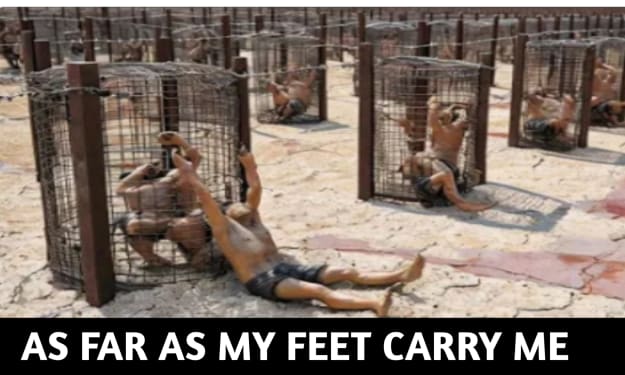
At the beginning of the story, we see a prison in Siberia, where many German soldiers are lined up. In fact, after the end of World War II, Russia captured a large number of German soldiers and forced them to work day and night in coal mines. Although the security of this prison was quite low, no one ever tried to escape from it. The reason was that the prison was surrounded by nothing but endless snow, and it was located about 14,000 kilometers away from any human settlement. So even if a prisoner managed to escape from this prison, his death in the freezing cold of Siberia was certain. This prison was built in the middle of snow stretching thousands of kilometers in every direction, which is why no prisoner could even imagine escaping from here. However, among these prisoners, there was one man who was extremely intelligent and wanted to escape from this prison to return to his wife and daughter. This prisoner’s name was Clemens Feirl. He had been sentenced to 25 years in this prison, and Clemens did not want half of his life to pass inside these prison walls. Clemens wanted to escape from this prison at any cost. Fortunately, one day Clemens got a chance to escape, and he fled the prison by hiding inside a freight train carrying coal. When he came out of the prison and saw the stars in the open sky, he felt overwhelmed with happiness. But this happiness was short-lived. After traveling some distance, the freight train was stopped. When Clemens looked outside, he saw a Russian soldier standing in front of him with a gun aimed at him. Unfortunately, Clemens was caught, and for the crime of escaping, he was locked inside an open-air cell. The cold was extreme, and the rain during the night worsened Clemens’s condition. He was not kept in that cell for a few hours, but for a full two days. After two full days, the next morning, the prison warden came to him and took him out of the cell, but did not torture him. He only said, “Your companions are waiting for you impatiently.” When Clemens reached his fellow prisoners, they were waiting for him with sticks and clubs in their hands. They were extremely angry with Clemens because, due to his escape attempt, all of them had been kept hungry for the past two days. Now Clemens understood why the warden had said that his companions were waiting for him. As soon as the other prisoners saw Clemens, they attacked him and beat him very badly. During this beating, Clemens was injured so severely that he had to be admitted to the prison hospital. The doctor of this prison was also a German prisoner. When Clemens regained consciousness, he said to the doctor, “I want to escape from this prison once again, and I need your help.” The doctor was astonished by Clemens’s courage. Even after enduring so much suffering, he was still not ready to give up. The doctor explained to him that escaping alive from this prison was impossible, and even if he did escape, he would die in the freezing cold outside. But the truth was that even if he did not escape, his death was still certain. The coal mines where they worked had extremely high levels of carbon, which entered their bodies through the air and caused deadly diseases like cancer. That is why the doctor said to Clemens, “You must try to escape from this prison one last time.”
By Filmon Ke Raaz | Movie Mysteries Explained27 days ago in The Swamp
“When Survival Created the First Friendship Between Man and Beast”
This story takes us back about 20,000 years from today, to a time when humans lived in small tribes. In the story, we see ancient European people who lived in tribal groups and hunted together. We are introduced to the leader of this tribe, whose name is Ergen. A few months later, winter is about to arrive, so Ergen goes out hunting with the people of his tribe to gather food for the cold season. In front of them is a very large herd of wild bison. Everyone crawls closer to the bison. Ergen, being the leader of the tribe, waits for the right moment and signals the attack, and everyone rushes toward the bison. To escape the hunters, the bison start running in the opposite direction, and one by one many of them fall into a ravine. However, one bison survives and, in anger, charges toward Ergen’s son, Noyan. Noyan has come on a hunt for the first time and does not know how to protect himself. Ergen tells his son to move out of the way, but Noyan gets scared and starts running. The wild bison quickly approaches Noyan, lifts him onto its horns, and runs toward the ravine. Seeing this, Ergen throws his spear at the bison to save his son. The spear hits the bison, but despite being injured, it does not let go of Noyan and instead throws him toward the edge of the ravine. From here, the story goes into a flashback, one week earlier, where we see the tribe preparing for the hunt. They are making different kinds of sharp weapons from stones. This was not just preparation; new people who wanted to join the hunt had to make such stone weapons. Whoever made the sharpest and most pointed weapon was selected for the hunt. In this competition, Ergen’s son Noyan also succeeds. That night, Noyan’s mother tells Ergen not to take Noyan on the hunt with him, saying that he is still a child. She says that she loves him very much and does not want to lose him. Ergen replies that winter is coming and at this time of the year everyone goes hunting. If they do not hunt, they will die of hunger during the winter, and Noyan must prove that he is his son. The next morning, all the people of the tribe leave for the hunt. Noyan’s mother feels anxious that something might happen to her son, but Ergen reassures her and says not to worry, nothing will happen to Noyan. Then they all set off on the hunt. After going some distance, they encounter another tribe that, like them, has also gone out hunting to gather food for the winter. After traveling a long distance, they reach a stone structure that was built by their ancestors. This journey is very dangerous, and many of their elders had lost their lives during it, which is why they built this stone structure in their memory. Moving forward, they spot a wild boar, which they injure with a spear. Ergen tells his son Noyan to kill it, but Noyan has never hunted before. He panics and is unable to kill the boar. Ergen then snatches the stone dagger from his hand, kills the boar, and says: “I never thought you would turn out to be so cowardly. Only the strong survive here — this is the law of the jungle.” At night, while they are eating their hunt, strange sounds are suddenly heard. Ergen tells everyone to stay alert. At that moment, a lion appears and carries away one of the boys. The next morning, they make a small grave in memory of that boy and continue their journey. Despite walking many miles, they do not find any more prey. After walking the entire day, they decide to spend the night in a cave. There, Ergen makes star-shaped tattoos on Noyan’s hand and tells him that these stars will appear in the night sky, and if he follows them, he will find his way back home. In reality, this is a map, so that if someone gets lost during the hunt, they can find their way back home.
By Filmon Ke Raaz | Movie Mysteries Explained27 days ago in The Swamp
Bethany Beyond the Jordan: The Sacred Place of Jesus’ Baptism. AI-Generated.
A Sacred Place Hidden in Plain Sight Along the eastern bank of the Jordan River, just a short distance from the Dead Sea, lies a place revered by millions of Christians around the world: Bethany Beyond the Jordan. Known in Arabic as Al-Maghtas, this site is widely recognized as the location where Jesus Christ was baptized by John the Baptist. Though modest in appearance, its spiritual weight is immense, making it one of the holiest places in Christianity. Unlike grand cathedrals or bustling pilgrimage cities, Bethany Beyond the Jordan offers something rare—silence, simplicity, and a powerful sense of sacred history. It is here, according to Christian tradition and strong archaeological evidence, that Jesus’ public ministry began. Biblical Roots of Bethany Beyond the Jordan The Gospel of John provides the clearest reference to this site, describing it as “Bethany beyond the Jordan, where John was baptizing.” For centuries, scholars debated the exact location of this biblical Bethany. Some believed it lay west of the river, while others argued for the eastern bank. Modern archaeology has largely settled the debate. Excavations in Jordan uncovered ancient baptism pools, churches, monasteries, and water systems dating back to the Roman and Byzantine periods—all pointing to this area as the original baptism site. Early Christian pilgrims also recorded journeys to this very location, strengthening its authenticity. John the Baptist and the Meaning of Baptism Bethany Beyond the Jordan is inseparable from the figure of John the Baptist, a prophet who preached repentance and spiritual renewal. His act of baptizing Jesus transformed baptism from a symbol of repentance into a cornerstone sacrament of Christianity. The baptism of Jesus represents humility, obedience, and divine affirmation. According to scripture, the heavens opened, the Holy Spirit descended like a dove, and a voice declared Jesus as God’s beloved Son. This moment marks the beginning of Jesus’ mission and gives the site its profound theological importance. For believers, standing near the waters of the Jordan is not just about history—it is about reconnecting with faith at its source. Archaeology That Brings Scripture to Life What sets Bethany Beyond the Jordan apart from many holy sites is the strength of its archaeological record. Researchers have uncovered: Ruins of early Christian churches built to honor the baptism site Monastic cells where early monks lived and prayed Large baptism pools used by pilgrims Ancient water channels connecting the site to the Jordan River These findings show that Christians revered this location from the earliest centuries of the faith. Rather than relying solely on tradition, Bethany Beyond the Jordan is supported by physical evidence that aligns closely with biblical descriptions. Recognition as a World Heritage Site In 2015, UNESCO officially recognized Bethany Beyond the Jordan as a World Heritage Site, citing its outstanding universal value and deep religious significance. This recognition placed the site alongside the world’s most important cultural and spiritual landmarks. Jordan’s role in preserving and promoting the site has been widely praised. Despite being located in a region often associated with conflict, Bethany Beyond the Jordan stands as a symbol of peace, coexistence, and shared heritage among Christians, Muslims, and Jews. A Place of Pilgrimage and Papal Visits Over the years, Bethany Beyond the Jordan has welcomed pilgrims from every corner of the world. Many describe their visit as deeply emotional, even transformative. The quiet landscape, combined with the slow flow of the Jordan River, creates an atmosphere of reflection rarely found at more crowded holy sites. Several popes, including Pope John Paul II, Pope Benedict XVI, and Pope Francis, have visited the site, reinforcing its importance within the global Christian community. These visits also elevated international awareness of Jordan as a custodian of Christian holy places. The Jordan River: More Than Just Water The Jordan River itself holds immense symbolic power. In the Bible, it represents transition, renewal, and divine intervention. From the Israelites crossing into the Promised Land to Jesus’ baptism, the river is a recurring setting for spiritual turning points. At Bethany Beyond the Jordan, the river becomes more than geography—it becomes theology. For many pilgrims, touching or seeing its waters is a reminder of spiritual cleansing and new beginnings, echoing the meaning of baptism itself. Interfaith Importance and Cultural Harmony While Bethany Beyond the Jordan is a Christian holy site, its significance extends beyond one faith. Jordan, a Muslim-majority country, has actively protected Christian heritage, offering a powerful example of interfaith respect. The site demonstrates how sacred spaces can unite rather than divide. In a region often portrayed through the lens of conflict, Bethany Beyond the Jordan tells a different story—one of shared history, mutual reverence, and peaceful coexistence. Visiting Bethany Beyond the Jordan Today Today, the site is carefully managed to preserve its spiritual atmosphere. Modern walkways guide visitors through ruins without disturbing the landscape. Informational signs explain both the biblical and archaeological significance, making the experience educational as well as devotional. Unlike many major pilgrimage destinations, Bethany Beyond the Jordan remains calm and uncluttered. This simplicity allows visitors to focus not on spectacle, but on meaning. Why Bethany Beyond the Jordan Still Matters In a fast-paced, modern world, Bethany Beyond the Jordan offers something timeless. It reminds believers of humility, faith, and beginnings. It reminds historians that ancient texts can align with physical evidence. And it reminds the global community that sacred heritage deserves protection, regardless of borders or beliefs. More than a historical landmark, Bethany Beyond the Jordan is a living testament to the moment when a quiet act in a river changed the course of religious history. Final Reflections Bethany Beyond the Jordan is not defined by grandeur, but by depth. It stands as a sacred bridge between scripture and soil, faith and history. For Christians, it marks the beginning of Jesus’ mission. For the world, it stands as a symbol of spiritual heritage preserved with dignity and care. In the stillness of the Jordan’s waters, the story of baptism continues to flow—inviting reflection, renewal, and reverence for generations to come
By Muhammad Hassanabout a month ago in The Swamp
Greed in the Desert: How the Promise of Gold Turned Survival Into a Death Trap
The film begins with a man named Sam who is traveling on a train. His life is not going well at all. At every turn, he faces problems. It is revealed that he is going to a deserted, desert-like city where he has to start a new job.
By Filmon Ke Raaz | Movie Mysteries Explainedabout a month ago in The Swamp
Ukraine War Briefing: Kyiv Battles to Stabilise a Ruined Power Grid After Major Russian Attack. AI-Generated.
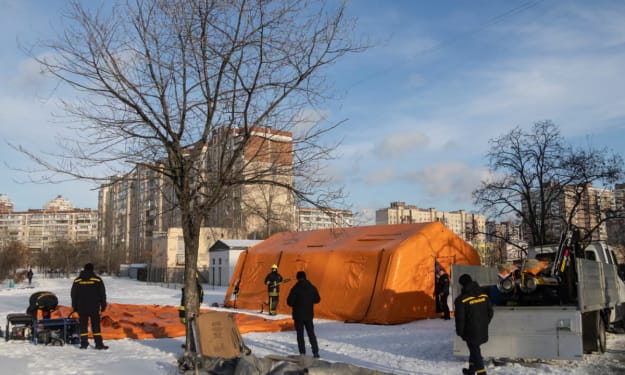
The war in Ukraine has entered another punishing phase, one where missiles and drones are no longer just aimed at military targets but at the infrastructure that keeps daily life running. Following a major Russian attack on energy facilities, Kyiv is now struggling to stabilise a power grid left battered and dangerously fragile. The latest strikes have plunged cities into darkness, disrupted heating and water supplies, and placed enormous strain on engineers racing against time, weather, and war. This briefing looks at what happened, why Ukraine’s power grid is such a critical target, and what the damage means for civilians, the government, and the wider conflict. A Renewed Assault on Energy Infrastructure In the early hours of the latest attack, waves of missiles and drones struck key energy sites across Ukraine. Power stations, substations, and transmission lines were hit simultaneously, suggesting a coordinated effort to overwhelm air defences and cripple electricity distribution. Ukrainian officials described the assault as one of the most damaging in recent months. While some missiles were intercepted, enough reached their targets to cause widespread outages. Entire regions experienced rolling blackouts, while critical services were forced onto emergency generators. For Kyiv, the capital, the consequences were immediate. Traffic systems faltered, apartment blocks lost heating, and hospitals were pushed to rely on backup power. In a city that has already endured repeated energy shocks since the start of the invasion, the psychological impact of returning darkness is profound. Why the Power Grid Matters So Much Ukraine’s power grid has become one of the central battlefields of the war. Unlike front-line fighting, attacks on infrastructure directly affect millions of civilians far from combat zones. Electricity is not just about lights; it underpins heating systems, water pumping, telecommunications, transport, and healthcare. By targeting the grid, Russia aims to weaken morale, disrupt the economy, and force the Ukrainian government into difficult choices. Each blackout tests public resilience and increases pressure on leaders to divert resources from military needs to civilian survival. For Ukraine, keeping the grid functioning is now a matter of national security. Energy stability affects everything from factory production to the ability of air defence systems and command centres to operate effectively. The Scale of the Damage Officials have been cautious about releasing precise details, citing security concerns, but the picture is grim. Key thermal and hydroelectric facilities suffered damage, while high-voltage substations were knocked offline. Transmission lines connecting regions were also hit, complicating efforts to reroute power. Engineers describe the grid as “patched together” after nearly two years of repeated attacks. Each new strike compounds existing weaknesses, making repairs more complex and less durable. Temporary fixes that worked months ago are now failing under renewed pressure. The challenge is not just physical destruction. Replacement equipment is scarce, specialised, and often imported. Installing it under constant threat of further strikes turns routine engineering work into a dangerous, high-stakes operation. Kyiv’s Race Against Time Ukrainian energy workers have once again become unsung heroes of the war. Working around the clock, often under air raid sirens, they are attempting to restore partial power and prevent a total collapse of the system. The government has introduced emergency schedules, prioritising electricity for hospitals, water facilities, and military-related industries. Rolling blackouts are being used to balance limited supply with essential demand. Officials acknowledge that stabilisation, not full recovery, is the immediate goal. With winter temperatures dropping, the focus is on keeping heating systems operational and preventing humanitarian crises in major cities. Kyiv has also urged citizens to conserve energy wherever possible, a message that has become familiar but no less urgent with each new wave of attacks. Civilian Life Under Strain For ordinary Ukrainians, the power crisis adds another layer of hardship to lives already shaped by war. Families adapt by stocking candles, power banks, and portable heaters. Shops and cafes operate when electricity is available, closing abruptly when outages hit. In apartment buildings, especially high-rises, the loss of power means no elevators and limited water pressure. For elderly residents and those with medical needs, these disruptions can be life-threatening. Despite the strain, public morale remains a key strength. Many Ukrainians see endurance as a form of resistance, refusing to let blackouts break their resolve. Social media is filled with images of candle-lit dinners and communal efforts to support vulnerable neighbours. International Support and Its Limits Western allies have provided Ukraine with air defence systems, generators, and financial aid aimed at bolstering energy resilience. These measures have undoubtedly saved lives and prevented even greater damage. However, the scale and frequency of the attacks highlight the limits of external assistance. Air defences cannot intercept every missile, and generators are only a stopgap solution. Rebuilding and hardening the grid requires time, money, and security—three things in short supply during an active war. The latest strikes are likely to renew calls from Kyiv for additional air defence capabilities, particularly to protect energy infrastructure. For Ukraine’s partners, the question is not only how much to provide, but how quickly. What This Means for the War Ahead The battle over Ukraine’s power grid underscores the long-term nature of the conflict. Rather than decisive breakthroughs on the battlefield, the war increasingly revolves around endurance, logistics, and civilian resilience. For Russia, infrastructure attacks offer a way to apply pressure without major territorial advances. For Ukraine, surviving these assaults while maintaining military resistance is a delicate balancing act. As Kyiv struggles to stabilise a ruined power grid once again, the message is clear: the war is being fought not only with tanks and troops, but with transformers, cables, and the will of a population determined to keep the lights on—literally and figuratively. In this phase of the conflict, every restored power line is an act of defiance, and every hour of electricity is a reminder that Ukraine’s resistance extends far beyond the front lines.
By Muhammad Hassanabout a month ago in The Swamp
‘An Incomprehensible Nightmare’: Grief Turns to Anger Over Swiss Bar Fire as Le Constellation Owner Arrested. AI-Generated.
New Year’s Eve is meant to symbolize hope, renewal, and fresh beginnings. In the Swiss Alpine resort town of Crans-Montana, however, the arrival of 2026 became a moment of unimaginable horror. A devastating fire at the popular nightclub Le Constellation claimed 40 lives and injured more than a hundred others, transforming a place of music and celebration into the epicenter of one of Switzerland’s deadliest peacetime disasters in decades. What followed was a wave of national mourning — and then something more powerful. As details emerged, grief began to turn into anger, and a collective question echoed across Switzerland and beyond: How could this have happened? A Night That Changed Everything Shortly after midnight on January 1, Le Constellation was packed with young people celebrating the New Year. Witnesses recall a festive atmosphere, champagne flowing, music pulsing, and crowds pressed close together. Within minutes, everything changed. Investigators believe that sparkler-style fireworks attached to champagne bottles ignited flammable soundproofing material on the ceiling. Flames spread rapidly through the confined basement space, filling the venue with smoke and heat before many people could react. Panic followed. Survivors described a desperate rush for exits, poor visibility, and crushing crowds as people tried to escape. Some broke windows. Others were trapped. Emergency services arrived quickly, but the fire’s speed and intensity left little chance for many inside. By dawn, the scale of the tragedy was clear. A Community in Mourning Crans-Montana, better known for ski holidays and postcard-perfect views, became a town united by sorrow. Many of the victims were teenagers and young adults, some as young as 14. Families from Switzerland, France, and Italy gathered in hospitals, churches, and temporary shelters, searching for answers and clinging to hope. A national day of mourning was declared. Bells rang across the country. Vigils were held, candles lit, and names read aloud. Swiss leaders were joined by foreign dignitaries in remembrance ceremonies, underscoring the international impact of the loss. But even as memorials continued, troubling information began to surface. From Grief to Outrage Public emotion shifted dramatically when authorities revealed that Le Constellation had not undergone a mandatory fire safety inspection since 2019, despite regulations requiring regular checks for venues hosting large crowds. For many families, this disclosure felt like a second shock. How could a nightclub operate for years without inspection? Who was responsible for ensuring safety standards were met? And why were obvious risks — such as indoor fireworks — allowed at all? The mayor of Crans-Montana acknowledged failures in oversight, admitting that inspections simply had not taken place. That admission sparked widespread anger, not only toward the bar’s owners but also toward local authorities and regulatory bodies. On social media and in public forums, the tone changed from mourning to demand: someone must be held accountable. The Arrest That Changed the Investigation That demand intensified when Swiss prosecutors announced the arrest of Jacques Moretti, co-owner of Le Constellation. Authorities placed him in pre-trial detention, citing concerns that he could leave the country and potentially evade justice. Prosecutors are now investigating possible charges including involuntary homicide, negligence, and causing bodily harm. His wife and business partner was questioned separately and placed under house arrest. For many families, the arrest offered a measure of reassurance — a sign that the tragedy was being taken seriously. For others, it raised further questions about how responsibility would ultimately be shared between private owners and public institutions. Voices of the Survivors Amid legal developments, survivors continue to process their trauma. Some remain hospitalized with severe burns and smoke inhalation injuries. Others are physically safe but psychologically scarred. Several have described recurring nightmares, survivor’s guilt, and a sense of disbelief that they lived while friends did not. Parents of victims have spoken of empty bedrooms, unfinished dreams, and futures erased in minutes. Their testimonies have become a powerful reminder that behind every statistic is a human life — and that accountability is not abstract, but deeply personal. A National Reckoning on Safety The fire has triggered a sweeping review of fire safety standards across Switzerland. Authorities have launched inspections of nightclubs, bars, and event spaces nationwide. Indoor pyrotechnics are being restricted or banned, and enforcement mechanisms are under renewed scrutiny. Yet critics argue that inspections alone are not enough. They are calling for: Clearer responsibility between municipalities and venue owners Transparent public records of safety inspections Stronger penalties for non-compliance Faster intervention when risks are identified If a disaster of this scale can happen in a country renowned for precision and regulation, many ask, what does that mean for public safety elsewhere? An Incomprehensible Nightmare — and a Turning Point The phrase repeated by grieving families — “an incomprehensible nightmare” — captures the emotional weight of the tragedy. But as legal proceedings move forward, that nightmare may also become a turning point. The Le Constellation fire has exposed systemic weaknesses, forced uncomfortable truths into the open, and sparked a nationwide conversation about responsibility, prevention, and justice. Whether those conversations lead to lasting reform remains to be seen. What is certain is this: the 40 lives lost on that New Year’s night will not be forgotten — and for many, justice will mean ensuring that such a tragedy never happens again.
By Muhammad Hassanabout a month ago in The Swamp
John Healey: Britain Won’t Let U.S. Use Its Bases to Attack Greenland. AI-Generated.
A rare and pointed statement from Britain’s defence leadership has sent ripples through NATO and transatlantic diplomacy. UK Defence Secretary John Healey has made it clear that Britain will not allow U.S. forces to use British military bases for any attack on Greenland, firmly distancing London from any military escalation involving the strategically vital Arctic territory. The declaration comes amid rising international anxiety over rhetoric from Washington that has once again placed Greenland — an autonomous territory within the Kingdom of Denmark — at the center of geopolitical speculation. Healey’s words underscore the UK’s determination to uphold international law, preserve alliance stability, and prevent the Arctic from becoming a new flashpoint for great-power confrontation. A Clear Message from London Speaking to British media, John Healey emphasized that UK bases are governed by strict agreements and international legal principles, and that they cannot be used to facilitate military actions that undermine allied sovereignty. “Britain will not permit its territory or bases to be used in any attack against Greenland,” Healey stated, stressing that such a scenario would be incompatible with Britain’s obligations to NATO allies and its commitment to diplomatic solutions. The message was unusually direct — a sign of how seriously London views the implications of any military move against Greenland. While Healey avoided explicitly criticizing the United States, the implication was unmistakable: the UK will not be drawn into unilateral military actions, even by its closest ally. Why Greenland Matters So Much Greenland’s importance far exceeds its small population. Sitting between North America and Europe, the massive Arctic island occupies a strategic crossroads crucial for missile defense, early-warning systems, and control of emerging Arctic shipping routes. The U.S. already operates Thule Space Base in Greenland, a key asset for missile tracking and space surveillance. However, Greenland remains under Danish sovereignty, and Denmark is a NATO ally with full legal authority over the territory’s defense arrangements. Any suggestion of military action against Greenland — even hypothetical — strikes at the heart of NATO’s foundational principle of collective defense and mutual respect for sovereignty. For Britain, allowing its bases to be used in such an action would risk fracturing alliances built over decades. A Delicate Moment for NATO Unity Healey’s statement reflects a growing unease among European allies about unpredictable or unilateral military rhetoric. NATO cohesion depends on trust, consultation, and consensus — values that European leaders insist must not be sacrificed for short-term strategic ambition. Britain, long seen as Washington’s closest European partner, has historically acted as a diplomatic bridge between the U.S. and the continent. By publicly drawing a red line, Healey signals that even this special relationship has boundaries when international law and allied unity are at stake. For Denmark, the reassurance from London carries particular weight. British support strengthens Copenhagen’s position that Greenland’s future must be shaped through diplomacy and cooperation — not force or coercion. Domestic Politics and Strategic Signaling Healey’s stance also plays well at home. British voters remain wary of being dragged into overseas conflicts, especially those lacking clear legal justification. By stating unequivocally that Britain would refuse to assist in an attack on Greenland, the defence secretary reinforces the image of a government acting independently and responsibly on the world stage. At the same time, the message is carefully calibrated. Healey did not question the U.S.–UK defense partnership or NATO commitments. Instead, he framed Britain’s refusal as a matter of rules, law, and alliance integrity, avoiding language that could be interpreted as anti-American. This balancing act highlights Britain’s evolving foreign policy posture: aligned with allies, but not subordinate to them. The Arctic as a New Geopolitical Frontier The controversy surrounding Greenland reflects broader tensions in the Arctic, where climate change is opening new sea routes and access to valuable natural resources. As ice melts, competition among global powers — including the U.S., Russia, and China — has intensified. European leaders fear that militarizing Arctic disputes could destabilize one of the world’s last relatively peaceful regions. Healey’s remarks reinforce Britain’s view that the Arctic should remain governed by international cooperation, not confrontation. Allowing British bases to support an attack on Greenland would send the opposite message, signaling that military power overrides diplomacy — a precedent London appears unwilling to set. Reactions Across Europe Healey’s comments were widely welcomed across Europe. Diplomats and analysts described them as a necessary assertion of principle at a time when alliance discipline is under strain. In Denmark, officials privately expressed relief that a major NATO partner had publicly affirmed Greenland’s security. In Brussels, European policymakers viewed the statement as reinforcing the idea that NATO remains a defensive alliance, not a tool for territorial expansion or coercion. Some U.S. commentators, however, criticized the remarks as unnecessarily provocative. Others argued that Healey’s clarity could actually help defuse tensions by removing ambiguity about Britain’s position. What Comes Next There is no indication that an actual military attack on Greenland is imminent. Yet Healey’s statement suggests that even speculative or rhetorical threats are being taken seriously by European capitals. Moving forward, the episode may prompt deeper discussions within NATO about the limits of base-sharing agreements and the importance of consultation before major strategic moves. It may also reinforce Denmark’s push for stronger diplomatic safeguards around Greenland’s status. For Britain, the message is now firmly on record: alliance loyalty does not mean unconditional support. A Line Drawn in the Ice John Healey’s declaration marks a significant moment in modern British foreign policy. By stating that the UK will not allow U.S. bases on its soil to be used against Greenland, London has reaffirmed its commitment to sovereignty, international law, and alliance responsibility. In an era of shifting power dynamics and rising geopolitical uncertainty, Britain has drawn a clear line — not just in policy, but in principle.
By Muhammad Hassanabout a month ago in The Swamp