history
Past politicians, legislation and political movements have changed the course of history in ways both big and small. Welcome to our blast to the past.
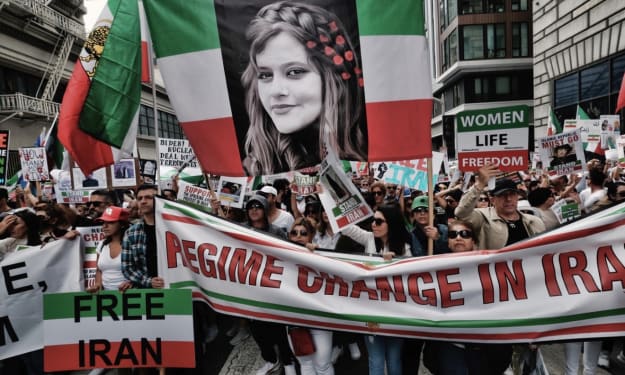
Iran’s supreme leader says protesters are ‘ruining their own streets’ to please Trump
The Iranian demonstrations against the regime are a good sign. For the nearly forty-seven years since the Islamic Revolution in that area, the people have been fighting. Some have been shrieking “Death to America!” while others seem to stop at nothing to tear down the walls of injustice in that region.
By Skyler Saundersabout a month ago in The Swamp
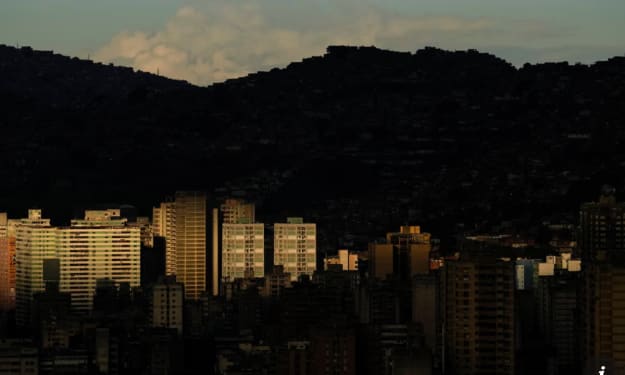
US Senate to Vote on Bid to Stop Trump from Taking Further Military Action in Venezuela. AI-Generated.
The United States is at a political and constitutional crossroads. In early January 2026, the U.S. Senate prepared to vote on a resolution aimed at limiting President Donald Trump’s ability to order further military action in Venezuela without Congress’ approval. The move has sparked a dramatic debate about the balance of power between the president and Congress — and what it means for America’s role on the global stage. Why the Senate Is Acting Now The immediate spark was a controversial U.S. military raid in Venezuela. Special forces captured Venezuelan President Nicolás Maduro and brought him to New York on charges related to alleged narco-terrorism. While some lawmakers praised the objective — removing a leader accused of serious crimes — many others were alarmed. Democrats and even some Republicans argued the Trump administration failed to consult Congress before launching a major military incursion. The question on everyone’s mind: Can a president unilaterally launch major military operations, or does Congress have a say? War Powers Under the Constitution The U.S. Constitution gives Congress the power to declare war, while the president serves as commander in chief. Historically, presidents have interpreted their powers broadly, often acting without formal declarations of war. To address this, Congress passed the War Powers Resolution of 1973, requiring the president to consult lawmakers when introducing U.S. forces into hostilities. Now, legislators are invoking that law to prevent further military action in Venezuela without their approval. Senators Tim Kaine (D‑VA) and Rand Paul (R‑KY) are leading a bipartisan push, joined by Senate leaders like Charles Schumer and Adam Schiff. Their argument: unchecked military action erodes constitutional balance and puts U.S. troops at risk. What the Resolution Would Do If passed, the resolution would require Trump to obtain Congressional approval for any additional military operations in Venezuela — including strikes, troop deployments, or other offensive actions. Lawmakers insist this is not just procedural. They view it as a crucial step to reassert Congressional authority and prevent unilateral military adventures abroad. Divisions in the Senate The vote is far from guaranteed. Many Republicans support Trump, arguing that the president acted lawfully and that restricting his military flexibility could weaken America’s global position. Even within the Republican Party, there is frustration over being kept in the dark about the Maduro raid. Bipartisan concerns about transparency and oversight are fueling debate. Even if the Senate passes the resolution, it faces hurdles: it must pass the House and survive a presidential veto — requiring a two-thirds majority to override. Why It Matters Beyond Venezuela This vote isn’t just about one country. Lawmakers warn that similar measures could be needed if the president seeks military action elsewhere — including Cuba, Mexico, or even Greenland. The central issue: Who decides when America goes to war — Congress or the president? The outcome could redefine U.S. foreign policy and influence how allies and adversaries view American intentions. Public Opinion and the Future Many Americans oppose giving the president unchecked authority to engage in military conflicts abroad. Polls suggest bipartisan support for requiring Congressional approval for major operations. The Senate vote will signal whether lawmakers align with public opinion or defer to presidential discretion. The Bigger Picture At stake is more than Venezuela. This is a test of constitutional balance, separation of powers, and America’s role in the world. As global tensions rise and questions of intervention intensify, the Senate’s decision could echo far beyond Washington. It is a moment that could shape how the U.S. engages internationally for years to come. Key Takeaways: The Senate vote seeks to limit Trump’s unilateral military action in Venezuela. The resolution invokes the 1973 War Powers Act to reassert Congressional authority. Bipartisan divisions make the outcome uncertain. The decision has implications for U.S. foreign policy, constitutional power, and global perceptions.
By Muhammad Hassanabout a month ago in The Swamp
“Always an Option”: Trump, Greenland, and the Return of Hard Power Politics. AI-Generated.
When a White House official suggested that the use of the U.S. military is “always an option” for President Donald Trump in any attempt to acquire Greenland, the comment sent a sharp jolt through diplomatic circles. What might once have sounded unthinkable — the idea of military leverage being linked to territorial acquisition — suddenly felt disturbingly plausible in a world where great-power competition is back in full force. The remark has reopened old wounds from Trump’s earlier interest in buying Greenland, but this time, the tone feels far more serious. It raises uncomfortable questions about sovereignty, international law, and the future of the Arctic as a zone of cooperation or confrontation. Greenland: Vast, Icy, and Strategically Priceless Greenland is not just the world’s largest island; it is one of the most strategically significant pieces of land on the planet. Located between North America and Europe, it sits astride critical Arctic shipping routes and hosts valuable rare-earth minerals, untapped natural resources, and advanced military positioning opportunities. The United States already maintains a military presence there through Thule Air Base (now known as Pituffik Space Base), a cornerstone of U.S. missile-warning and space-surveillance systems. As climate change melts Arctic ice, Greenland’s importance is only growing. In that context, Trump’s long-standing interest in Greenland reflects a broader shift in U.S. strategic thinking: the Arctic is no longer a frozen backwater — it is a geopolitical frontier. From Real Estate Logic to Military Language Trump’s fascination with Greenland first emerged publicly during his previous presidency, when he openly floated the idea of purchasing the island from Denmark. The proposal was widely mocked at the time, dismissed as a throwback to 19th-century imperialism. Denmark responded firmly, stating that Greenland is not for sale, and Greenland’s own leaders emphasized their right to self-determination. What has changed now is not the object of interest, but the language surrounding it. The suggestion that military force is “always an option” shifts the conversation from eccentric diplomacy to something far more unsettling. Even if the comment was meant rhetorically, it signals a worldview in which power precedes consent. Sovereignty and International Law at Stake Under international law, Greenland is an autonomous territory within the Kingdom of Denmark. Any attempt to acquire it without consent would violate fundamental principles of sovereignty and self-determination. The idea that a U.S. president could even theoretically consider military force for territorial acquisition alarms allies and adversaries alike. It undermines decades of post-World War II norms designed to prevent exactly this kind of behavior. For smaller nations, such statements are especially worrying. If powerful states openly suggest that military options remain on the table, it weakens the entire framework of international law that protects less powerful actors. What This Means for U.S.–Europe Relations Denmark is a NATO ally. So is the United States. The mere suggestion of coercive action against allied territory strains the credibility of NATO’s foundational promise: collective defense based on mutual trust. European leaders have already expressed discomfort with Trump’s revived rhetoric. For them, Greenland is not a bargaining chip, but a matter of legal ownership, democratic governance, and regional stability. If alliances are built on shared values, comments like these test whether those values still hold. The Arctic as the New Great-Power Chessboard Behind the controversy lies a larger reality: the Arctic is becoming a key arena in global competition. Russia has expanded its Arctic military infrastructure. China has declared itself a “near-Arctic state” and invested heavily in polar research and infrastructure. The U.S., wary of falling behind, is recalibrating its Arctic strategy. In this environment, Greenland looks less like a distant island and more like a strategic keystone. The danger is that competition may slide into confrontation, especially if leaders frame geopolitical interests in zero-sum terms. Domestic Politics and Trump’s Leadership Style Trump’s leadership has always emphasized strength, leverage, and unpredictability. Supporters argue that such rhetoric projects deterrence and keeps rivals guessing. Critics counter that it erodes trust and escalates tensions unnecessarily. The White House official’s remark fits this pattern. Whether meant as a serious policy position or a maximalist negotiating posture, it reflects a governing philosophy that views military power as a legitimate tool in almost any context. For Trump’s base, this reinforces the image of a president unwilling to be constrained by diplomatic niceties. For others, it raises fears of recklessness. Greenland’s Voice Often Overlooked Lost in much of the debate is the perspective of Greenlanders themselves. Greenland has been steadily increasing its autonomy and discussing eventual independence. Its population has repeatedly made clear that their future should be decided in Nuuk, not Washington or Copenhagen. Any conversation about acquiring Greenland that ignores its people risks repeating the very colonial logic that modern international norms were meant to dismantle. A Dangerous Signal to the World Perhaps the most significant impact of the statement is symbolic. When a superpower publicly suggests that military force remains an option for territorial gain, it sends a message far beyond Greenland. It tells the world that rules are flexible, norms are negotiable, and power still speaks loudest. In an era already marked by war, territorial disputes, and eroding trust, that message is profoundly destabilizing. Final Thoughts The idea that the U.S. military could be used to acquire Greenland may never move beyond rhetoric. But rhetoric matters — especially when it comes from the White House. Greenland is not just ice and rock; it is a test case for whether the 21st century will be governed by cooperation or coercion. As global tensions rise and the Arctic heats up — politically and environmentally — how leaders speak about power may shape the future as much as how they use it. In a world struggling to hold onto shared rules, even the suggestion that force is “always an option” carries consequences far beyond one island.
By Muhammad Hassanabout a month ago in The Swamp
Renee Nicole Good and the Minneapolis ICE Shooting. AI-Generated.
The name Renee Nicole Good has become central to a rapidly unfolding and emotionally charged story emerging from Minneapolis, Minnesota. Reports of a woman shot by ICE in Minneapolis have circulated widely across social media and local news platforms, prompting public confusion, political debate, and renewed scrutiny of federal law enforcement practices. As details continue to emerge, many are asking the same questions: Who was Renee Nicole Good? What happened in Minneapolis today? And what role, if any, did ICE agents play in the shooting? Who Is Renee Nicole Good? According to publicly shared information, Renee Nicole Good, sometimes listed as Nicole Renee Good or Renee Good Minnesota, was a 37-year-old woman connected to the Minneapolis community. While online searches for “who is Renee Nicole Good” surged after the incident, verified personal details remain limited. Some posts reference her as a wife and community member, while others link her to local institutions such as Minneapolis public schools and Roosevelt High School Minneapolis, though these associations have not been formally confirmed. As with many breaking news events, speculation has spread faster than verified facts. Reputable outlets including WCCO, KARE 11, MPR News, KSTP, and the Star Tribune have urged caution while authorities continue to investigate. What Happened in Minneapolis? The incident, often described online as the Minneapolis ICE shooting today or ICE shooting Minneapolis, reportedly occurred near 34th and Portland Avenue in Minneapolis. Early reports described a shooting in Minneapolis today involving federal agents and a civilian woman later identified by online sources as Renee Nicole Good. Claims ranging from “ICE agent kills woman in Minneapolis” to “woman shot by ICE Minneapolis” circulated rapidly. However, law enforcement officials have emphasized that the situation is under active investigation and that definitive conclusions about responsibility have not yet been released. ICE and Law Enforcement Authority A central issue driving public debate is the role of ICE agents and their authority. Many Americans are now asking: Is ICE law enforcement? Are ICE agents police? U.S. Immigration and Customs Enforcement (ICE) is a federal agency under the Department of Homeland Security (DHS). ICE agents are law enforcement officers with specific federal authority, primarily related to immigration enforcement and national security investigations. However, ICE is not a traditional local police force, and its presence in city neighborhoods like Minneapolis has long been controversial. The reported ICE involved shooting in Minnesota has reignited questions about jurisdiction, training, and use-of-force standards—especially in cities with deep historical tensions between communities and law enforcement. Political and Community Response The reaction in Minneapolis has been swift. Mayor Jacob Frey, the mayor of Minneapolis, acknowledged public concern and called for transparency. While avoiding premature conclusions, city leadership emphasized cooperation with state and federal investigators. Minnesota Governor Tim Walz has reportedly been briefed, and discussions involving the Minnesota National Guard surfaced online, though officials have not confirmed any deployment related to this incident. National political figures, including Angie Craig and Kristi Noem, were mentioned in online discourse as the story gained national traction. The event has also revived painful memories of George Floyd, whose killing in 2020 placed Minneapolis at the center of global conversations about policing, accountability, and protest. As a result, Minneapolis protests and calls for oversight have again become part of the public conversation. Media Coverage and Public Questions Local and national outlets such as KARE11, WCCO News, MPR, and Star Tribune continue to report developments as they are confirmed. Headlines referencing “Minnesota ICE shooting today” and “woman killed by ICE in Minnesota” underscore the urgency—but also the uncertainty—surrounding the case. Among the most common questions being asked: Who was the woman shot in Minneapolis? Why did ICE shoot Renee Good? Was the shooting justified or accidental? Who is the ICE agent involved? At this stage, authorities have not publicly released the name of any ICE officer involved, nor have they finalized findings about the circumstances that led to the shooting. A City Waiting for Answers For residents of Minneapolis, the incident represents more than a single tragic event. It reflects broader tensions involving immigration enforcement, federal authority, and community trust. Whether described as an ICE agent shooting, a Minnesota shooting today, or simply a tragic loss of life, the case of Renee Nicole Good Minneapolis has become a focal point for national reflection. As investigations proceed, officials urge the public to rely on verified information from trusted news organizations and to allow due process to unfold. The coming days are expected to bring greater clarity about what happened in Minnesota, the exact role of ICE in Minneapolis, and how accountability will be addressed. Conclusion The story surrounding Renee Nicole Good and the reported ICE shooting in Minneapolis remains fluid and deeply sensitive. While emotions run high and political implications are unavoidable, facts must guide the conversation. Until investigators complete their work, the most responsible path forward lies in patience, transparency, and respect for all those affected. Minneapolis has faced moments like this before—and how the city, state, and nation respond may once again shape the broader discussion around law enforcement, federal power, and community justice in America.
By Saboor Brohi about a month ago in The Swamp
Mette Frederiksen: Greenland isn't Yours!
Trump has always been obsessed with Greenland. During his first term, he mentioned it then. Now, in his second coming, President Trump stated the US needs Greenland for defence. Mentioning Russian and Chinese ships that pass that way. Of course, one has to take into account the minerals that lie under the snow that covers Greenland. So is Trump's interest merely for defence or business or both? The irony of it is that Greenland already has a US military base there with the permission of Denmark.
By Nicholas Bishopabout a month ago in The Swamp
Holocaust Survivor Eva Schloss, Stepsister of Anne Frank, Dies at 96. AI-Generated.
Eva Schloss, a Holocaust survivor and the stepsister of Anne Frank, has died at the age of 96, marking the end of a life devoted to remembrance, education, and the fight against hatred. Her passing closes an extraordinary chapter in Holocaust testimony, but her voice, message, and moral courage will continue to resonate across generations.
By Ayesha Lashariabout a month ago in The Swamp
Gunmen Raid Village in Northern Nigeria, Killing at Least 30 People and Abducting Others. AI-Generated.
StartNorthern Nigeria has once again been shaken by violence after gunmen raided a rural village, killing at least 30 people and abducting several others in a late-night attack that has left survivors traumatized and communities fearful of what may come next. The assault, carried out by heavily armed attackers on motorcycles, highlights the worsening insecurity gripping large parts of the country’s north and the persistent vulnerability of rural populations.
By Ayesha Lashariabout a month ago in The Swamp
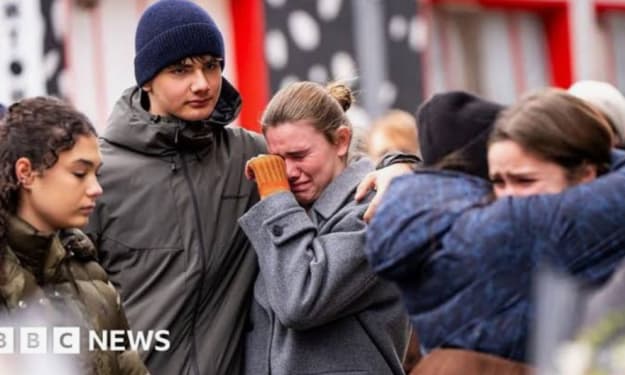
Swiss Open Criminal Case Against Managers of Ski Resort Bar After Deadly Fire. AI-Generated.
Swiss authorities have opened a criminal investigation into the managers of a ski resort bar after a deadly fire claimed the lives of several people and injured many more. The fire, which occurred in the early hours of the morning, has shocked the local community and drawn national attention to the safety practices at recreational venues, particularly those that serve alcohol.
By Ayesha Lashariabout a month ago in The Swamp
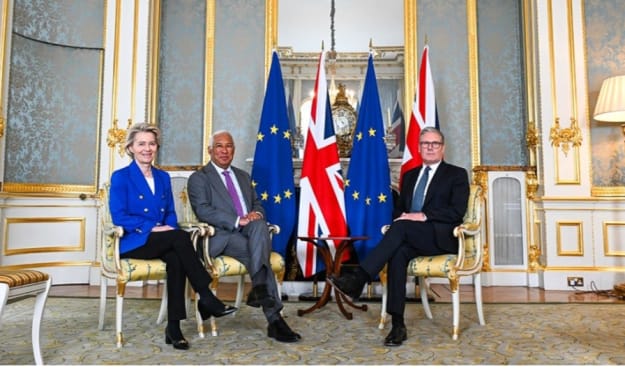
EU-UK Summit, 19 May 2025: A Reset Moment in a Post-Brexit World
The EU-UK summit held on 19 May 2025 marked one of the most significant diplomatic encounters between Brussels and London since Brexit officially reshaped their relationship. Nearly a decade after the referendum, both sides arrived at the table with a shared understanding: cooperation, not confrontation, is now essential in an increasingly unstable global environment.
By Aarif Lashariabout a month ago in The Swamp