history
Past politicians, legislation and political movements have changed the course of history in ways both big and small. Welcome to our blast to the past.
Stroke Victim Unable to Call Emergency Services as BT Cuts Landline
In a shocking incident that highlights the vulnerability of the elderly and disabled, a stroke victim was unable to dial 999 when an emergency struck due to their BT landline being disconnected. The incident has sparked widespread concern over the impact of telecommunications policies on public safety, particularly for those who rely on traditional landline services.
By Ayesha Lashari11 days ago in The Swamp
“France Takes a Stand: MPs Back Ban on Social Media for Under‑15s in Major Legislative Step. AI-Generated.
National Assembly approves bill to halt social media use by young teens In a significant move that could reshape how young people in France interact with the digital world, members of the French National Assembly voted overwhelmingly in favour of a bill that would ban access to social media platforms for children under the age of 15. The vote, which took place in Paris during a late‑night session on January 26–27, marks a pivotal milestone in the country’s efforts to address mounting concerns over mental health, online safety, and the influence of global tech giants on young minds. Lawmakers backed the measure by a vote of 116 to 23, advancing the legislation to the Senate for further consideration. �
By Ayesha Lashari12 days ago in The Swamp
Tearful Goodbyes as Japan Returns Pandas to China Amid Worsening Ties. AI-Generated.
On a chilly January morning at Ueno Zoological Gardens in Tokyo, crowds gathered for a bittersweet occasion. Xiao Xiao and Lei Lei, the beloved giant pandas who had captured the hearts of Japanese citizens since their birth in 2021, were about to leave Japan and return to their native China. The air was heavy with emotion as visitors, many of whom had grown up visiting these iconic black-and-white bears, lined up for hours just to say their final goodbyes.
By Aqib Hussain12 days ago in The Swamp
Body Found Believed to Be Missing Antiques Dealer. AI-Generated.
The discovery of a body believed to belong to a missing antiques dealer has brought a grim turn to a case that has troubled both investigators and the local community for weeks. What began as a missing person report has now escalated into a full-scale investigation, raising troubling questions about what may have happened during the dealer’s final days.
By Ayesha Lashari13 days ago in The Swamp
The Ninth Hour of Malachi. AI-Generated.
The Weight of the Ninth Hour There is something unsettling about the ninth hour. It is not dawn, when hope is easy. It is not midnight, when despair is expected. The ninth hour sits in between—when the day has been lived, strength is fading, and certainty begins to crack. In ancient tradition, the ninth hour marked a moment of reckoning. A pause in time when heaven felt close enough to hear prayers, yet distant enough to remain silent. It was the hour of sacrifice, of unanswered questions, of last chances spoken under breath. For Malachi, the prophet whose voice closed the Old Testament, the ninth hour was not merely a time of day. It was a state of the soul. II. Malachi: The Last Voice Before the Silence Malachi stands at the edge of something terrifying: divine silence. After him, there would be no new prophetic voice for centuries. No visions. No warnings. No promises freshly spoken. Just echoes. His name means “My messenger.” But what happens when the messenger delivers the final message? Malachi’s world was spiritually exhausted. The temple stood, rituals continued, prayers were recited—but belief had become mechanical. Faith was still present, but reverence was gone. The people asked dangerous questions: Where is the God of justice? What is the point of obedience? Why remain faithful when the wicked prosper? Malachi did not comfort them. He confronted them. III. The Ninth Hour as a Spiritual Threshold The ninth hour represents the moment when faith is no longer theoretical. It is easy to believe when prayers are answered quickly. It is easy to trust when obedience is rewarded. But the ninth hour arrives when: You have done everything right You have waited long enough You have sacrificed without recognition And heaven remains silent. This is the hour when belief becomes existential. Not “Do I believe?” But “Can I continue believing?” IV. Ritual Without Reverence Malachi accused the people of offering blind sacrifices—rituals without heart. They obeyed outwardly while withholding inward devotion. They honored God with words but not with integrity. This wasn’t rebellion. It was worse. It was spiritual boredom. The ninth hour exposes this condition. When faith becomes habit instead of hunger, silence feels unbearable. Without emotional reward, obedience feels pointless. Malachi’s message was brutal: God does not reject imperfect people. He rejects indifferent ones. V. Silence as Judgment One of the most misunderstood ideas in spirituality is silence. We assume silence means absence. Malachi suggests it may mean judgment. When warnings are ignored long enough, explanation stops. Not out of cruelty—but finality. Silence forces self-examination. In the ninth hour, there is no new revelation. Only memory. Only conscience. Only the uncomfortable echo of past truths we postponed obeying. VI. The Refining Fire Malachi famously speaks of fire—not destruction, but refinement. “He will sit as a refiner and purifier of silver.” Refinement is slow. Intentional. Painful. Fire does not destroy silver. It exposes impurity. The ninth hour is the fire moment. The stage where: Excuses melt Performative faith collapses Motives surface What remains is what was real. VII. The Modern Ninth Hour We like to believe prophecy belongs to the ancient world. But the ninth hour is not historical—it is recurring. It appears: In personal crises In spiritual burnout In moral confusion In societies where values erode quietly We live in an age of noise, yet many experience spiritual silence. Infinite content, minimal meaning. Infinite opinions, fragile conviction. The ninth hour today looks like: Faith reduced to aesthetics Morality replaced by convenience Truth softened to avoid discomfort Malachi would not recognize our technology—but he would recognize our exhaustion. VIII. Doubt Is Not the Enemy Malachi did not condemn doubt. He confronted dishonesty. There is a difference between: Questioning God Performing belief The ninth hour allows doubt to surface honestly. It strips away borrowed faith and inherited answers. Only one question matters here: If no one is watching, will I still be faithful? IX. The Cost of Being the Remnant Malachi speaks of a “remnant”—those who feared the Lord when others drifted. They were not louder. They were not powerful. They were simply faithful in obscurity. The ninth hour is lonely. Those who endure it often feel: Misunderstood Uncelebrated Outdated But endurance shapes identity. The remnant is not defined by numbers, but by resilience. X. Waiting Without Assurance Perhaps the most painful aspect of the ninth hour is uncertainty. Malachi promises justice—but not immediacy. Restoration—but not a date. Waiting without assurance transforms faith from transaction to trust. Not: “I obey because I will be rewarded.” But: “I obey because truth remains true, even in silence.” This is mature faith. This is costly faith. XI. When Hope Feels Delayed Hope delayed is dangerous. Proverbs calls it “a sick heart.” Malachi understood this tension. He did not offer emotional relief. He offered perspective. History, he implied, is longer than individual suffering. Justice moves slower than impatience—but never forgets. The ninth hour asks: Can you trust a timeline larger than your lifetime? XII. The Promise After the Silence Malachi ends not with despair, but anticipation. A messenger will come again. A refining will occur. Healing will rise like the sun. But only after the long quiet. The ninth hour does not last forever—but it must be endured fully. XIII. Faith After Performance What remains after the ninth hour is stripped-down belief. No spectacle. No emotional highs. No constant reassurance. Just conviction. This faith is quieter—but stronger. Less visible—but unshakeable. XIV. The Question That Remains The ninth hour leaves us with one haunting question: When faith stops rewarding you—will you still carry it? Not because it benefits you. Not because it elevates you. But because it is true. Conclusion: Living Past the Ninth Hour The Ninth Hour of Malachi is not about time. It is about testing depth. It is the space between promise and fulfillment. Between belief and proof. Between silence and revelation. Most abandon faith here. Some redefine it. A few are refined by it. And those few carry forward something rare in every age: A faith that does not depend on noise.
By Zahid Hussain13 days ago in The Swamp
Spanish Track Fractured Before High-Speed Train Disaster, New Report Reveals. AI-Generated.
A newly released report into the tragic Spanish high-speed train disaster has revealed that a fractured track was a critical factor in the fatal crash that occurred several months ago. This shocking discovery raises significant concerns about the safety of Spain’s high-speed rail network and the broader issue of infrastructure maintenance. The investigation underscores the complexity of the accident, suggesting that a combination of technical failures and human error contributed to the devastating consequences.
By Ayesha Lashari14 days ago in The Swamp
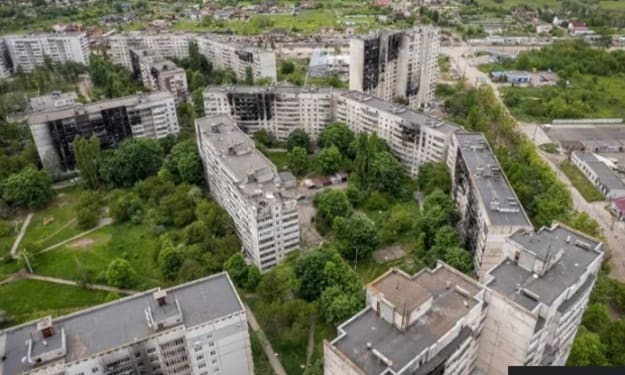
Soviet Urban Planning: How Soviet-Era Infrastructure is Helping Russia Freeze Ukraine's Cities. AI-Generated.
Introduction: Soviet Architecture in a Modern Conflict The war between Russia and Ukraine, particularly since the Russian invasion in 2022, has been marked by brutal strategies, one of which involves the use of urban infrastructure as a weapon of war. As the world watches, one interesting aspect of this ongoing conflict has been the role of Soviet-era urban planning in facilitating Russia’s strategy of freezing Ukraine's cities. The very infrastructure built during the Soviet period, known for its large-scale, utilitarian designs, is now playing a significant role in the conflict. Russia's ability to target these systems—and, by extension, civilians—demonstrates how deeply embedded Soviet urban designs are in the daily lives of both Russians and Ukrainians. This article explores how the architecture of a bygone era has been weaponized in the modern-day conflict.
By Ayesha Lashari14 days ago in The Swamp
Help with US border
Overview of the Proposal President Donald Trump recently suggested — in a social media post on Truth Social — that the United States “should have” invoked Article 5 of the North Atlantic Treaty Organization (NATO) in order to bring NATO forces to the U.S. southern border to help stem illegal immigration. According to Trump, calling on NATO allies to secure the border would “free up large numbers of Border Patrol Agents for other tasks.” Article 5 is NATO’s collective defense clause, stating that an armed attack on one member is considered an attack on all. It’s the cornerstone of the alliance’s mutual defense guarantee — and in nearly 80 years, it has been invoked only once, when NATO allies responded to the September 11, 2001 terrorist attacks on the United States. Trump’s remarks represent a sharp departure from how Article 5 has historically been understood and applied. Illegal immigration — no matter the scale — is not typically viewed as an armed attack by another state, which is the standard under the treaty to trigger collective defense.
By USA daily update 14 days ago in The Swamp
India and EU Set for ‘Mother of All Deals’ as Trump’s Tariff Uncertainty Looms. AI-Generated.
India and the European Union are moving closer to what officials are calling the “mother of all deals”, as both sides accelerate negotiations on a long-awaited free trade agreement amid growing uncertainty over potential tariff changes under a renewed Donald Trump presidency.
By Aarif Lashari15 days ago in The Swamp
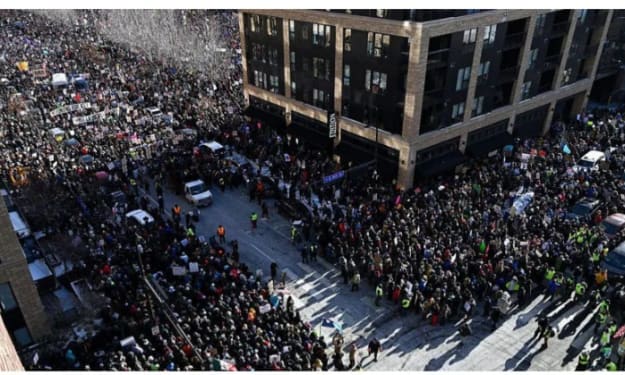
Hundreds of Minnesota Businesses Close to Protest ICE Presence: A Show of Solidarity and Resistance. AI-Generated.
Introduction In a powerful and unprecedented move, hundreds of businesses across Minnesota closed their doors to protest the presence of Immigration and Customs Enforcement (ICE) agents in their communities. This act of solidarity, known as a “Day Without Immigrants,” signals growing unrest over the agency’s aggressive tactics and their impact on immigrant communities. The protest is not just a statement against ICE, but also a plea for humane immigration policies that prioritize human dignity over enforcement actions.
By Ayesha Lashari15 days ago in The Swamp