
2026 Winter Olympics Ice Hockey
Rivalries, and a Global Stage

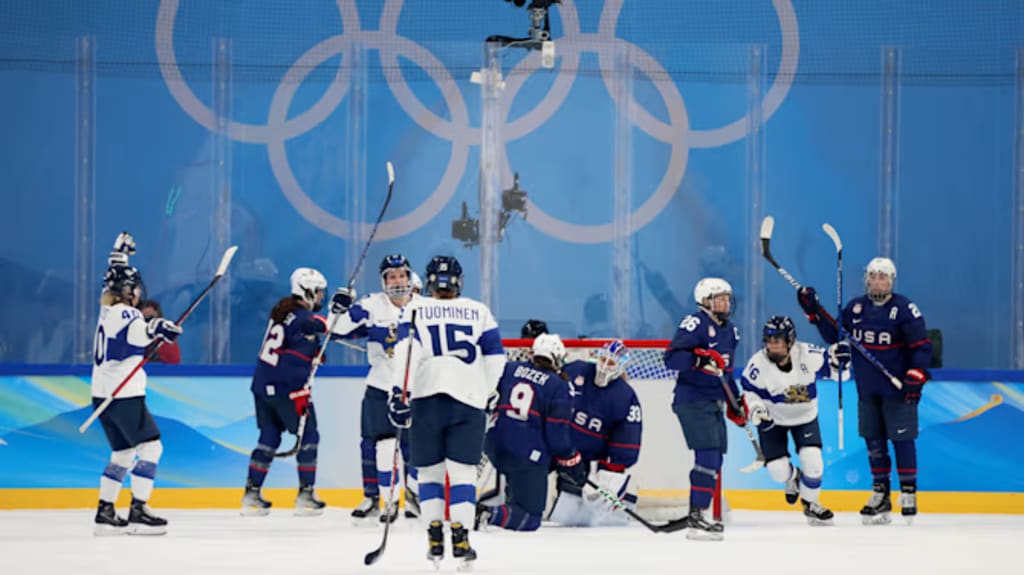
Ice hockey has long been one of the defining events of the Winter Olympic Games, combining speed, strategy, and national pride in a way few other sports can match. As the world turns its attention to the 2026 Winter Olympics in Milan and Cortina d’Ampezzo, ice hockey is once again expected to take center stage. With historic rivalries, emerging talent, and the possibility of top professional players competing, the tournament promises to be one of the most compelling chapters in Olympic hockey history.
A Return to Tradition in a New Setting
The 2026 Winter Olympics mark Italy’s return as a host nation for the Winter Games, nearly 20 years after Turin 2006. While Italy is not traditionally considered a hockey powerhouse, the sport has steadily grown in popularity across Europe. Hosting the Olympics provides an opportunity to showcase the game to new audiences while reinforcing its global appeal.
Ice hockey at the Olympics has always carried a distinct identity compared to professional leagues. The shorter tournament format intensifies every matchup. A single mistake can end medal hopes, and momentum can shift in an instant. That sense of urgency makes Olympic hockey uniquely dramatic, even for fans accustomed to the long grind of league seasons.
The Importance of NHL Participation
One of the most discussed aspects of Olympic ice hockey in recent years has been the participation of National Hockey League (NHL) players. When NHL athletes compete, the tournament becomes a true “best-on-best” showcase. The skill level rises, the pace quickens, and the stakes feel even higher.
If NHL players participate in 2026, fans could witness generational talents representing their countries on the Olympic stage. For players, wearing their national jersey often carries emotional weight that transcends professional rivalries. The Olympics offer a rare chance to compete not for a franchise, but for a flag.
Past tournaments that included NHL players, such as Vancouver 2010 and Sochi 2014, delivered memorable moments. The dramatic gold medal game between Canada and the United States in 2010 remains one of the most iconic hockey games ever played. A similar atmosphere in 2026 would elevate the Games and capture global attention.
Traditional Powerhouses and Rising Contenders
Olympic ice hockey has long been dominated by a few traditional powerhouses. Canada, the United States, Sweden, Finland, and Russia (or Russian athletes competing under neutral status) have consistently contended for medals. These nations combine deep talent pools with strong hockey cultures and development systems.
Canada enters nearly every Olympic tournament as a favorite. With a history of success and a pipeline of elite players, Canadian teams often blend experience with skill. The United States, meanwhile, continues to develop young stars at a rapid pace, making them a serious contender. Sweden and Finland, known for disciplined play and tactical precision, have also built reputations for excelling in high-pressure games.
Beyond the traditional giants, the 2026 tournament may highlight the growing competitiveness of other nations. Countries such as Switzerland, Germany, and the Czech Republic have demonstrated that they can challenge established powers. Germany’s silver medal run in 2018, for example, showed that disciplined team play and resilience can disrupt expectations.
This expanding competitive field adds intrigue. Olympic hockey is no longer predictable. Upsets are possible, and the gap between elite teams and emerging contenders continues to narrow.
Women’s Ice Hockey: Momentum and Growth
The women’s ice hockey tournament in 2026 is expected to be equally compelling. Over the past decade, women’s hockey has experienced significant growth in visibility and professional development. The rivalry between Canada and the United States remains one of the most intense in Olympic sports, with gold medals frequently decided by narrow margins.
However, other nations are closing the gap. Finland has consistently challenged the top two teams, and countries such as Switzerland and Japan have made strides in development programs. The increasing depth of competition reflects broader efforts to invest in women’s hockey worldwide.
The Olympic stage plays a crucial role in accelerating that growth. For many young athletes, watching women compete at the highest level inspires participation and ambition. The 2026 Games will likely continue that trend, offering a platform for new stars to emerge.
Strategy, Speed, and Style
Olympic hockey differs subtly from league play in its style. The international ice surface, often slightly larger than NHL rinks, can emphasize skating ability and puck movement. Teams must adjust tactically, prioritizing speed and positional awareness.
Coaching also plays a decisive role. With limited preparation time, coaches must quickly build chemistry among players who may not have played together before. Successful teams often strike a balance between individual brilliance and structured systems.
Special teams—power plays and penalty kills—frequently determine outcomes in tightly contested games. In a short tournament format, capitalizing on scoring chances becomes essential. Goaltending, too, can define a team’s fate. A single outstanding performance in net can carry a team deep into medal contention.
Cultural Impact and Global Reach
Beyond the ice, Olympic hockey carries cultural significance. For many countries, the sport is intertwined with national identity. Victories can spark celebrations that extend far beyond arenas, uniting communities in shared pride.
The 2026 Winter Olympics will be broadcast worldwide, introducing new audiences to the intensity and artistry of ice hockey. In regions where the sport is still developing, Olympic exposure can drive grassroots interest and infrastructure investment.
For Italy, hosting the Games provides an opportunity to promote winter sports more broadly. Even if the host nation is not a medal favorite in hockey, the experience of staging the tournament may leave a lasting legacy in facilities, youth programs, and public engagement.
Looking Ahead
As anticipation builds for Milan-Cortina 2026, ice hockey stands poised to deliver another chapter of unforgettable moments. Whether defined by a sudden-death overtime goal, a breakthrough performance from an underdog team, or the crowning of a new champion, the tournament will reflect the evolving landscape of the sport.
Olympic hockey endures because it blends elite competition with emotional resonance. Players compete not only for medals but for national pride. Fans invest not only in outcomes but in stories—of resilience, rivalry, and redemption.
When the puck drops in 2026, the world will once again gather around the rink. For two weeks, the speed of the game and the weight of expectation will converge, reminding audiences why ice hockey remains one of the most captivating events of the Winter Olympic Games.
About the Creator
Saboor Brohi
I am a Web Contant writter, and Guest Posting providing in different sites like techbullion.com, londondaily.news, and Aijourn.com. I have Personal Author Sites did you need any site feel free to contact me on whatsapp:
+923463986212
Keep reading
More stories from Saboor Brohi and writers in Unbalanced and other communities.
Men’s Short Program in Figure Skating
The men’s short program in figure skating is one of the most demanding segments in the sport. Though it lasts only a few minutes, it carries enormous weight in competition. Every movement is judged, every jump must meet strict technical requirements, and even small mistakes can significantly affect standings. In elite events—whether national championships, world competitions, or the Olympic Games—the men’s short program often sets the tone for the entire event.
By Saboor Brohi about 11 hours ago in Unbalanced
Super Bowl LX Recap: A Team Called Hawks
Sixty. The Super Bowl turned 60! Still amazes me that this was the sixtieth Super Bowl played in NFL history. It seems like yesterday that I watched Super Bowl XXVII, the first SB I ever watched. The QB who won Super Bowl XXVII has since called a few SBs, and will call next year's game, but that's another story. Super Bowl LX took place at Levi's Stadium in Santa Clara, California, the home stadium of the San Francisco 49ers. However, it was one of their division foes who represented the NFC, as the Seattle Seahawks faced off against the New England Patriots.
By Clyde E. Dawkins2 days ago in Unbalanced
Somers Dominates at John Jay, Defeats Croton on Senior Night
Scroll down for freshman basketball pics and varsity vs John Jay, Panas and Put Valley After beating Croton-Harmon to open the season, Somers traveled to John Jay on Saturday, December 6 with a long memory. “They beat us up pretty bad last year,” said Leo Keimig. But going up 18 half way through the third certainly seemed to alleviate old wounds. That is until John Jay cut the lead to ten. So an answer was needed, and Keimig made the grade, according to Coach Loughlan.
By Rich Monettia day ago in Unbalanced



Comments
There are no comments for this story
Be the first to respond and start the conversation.