Latest Stories
Most recently published stories in Longevity.
Demond Wilson. AI-Generated.
Demond Wilson is a name forever tied to one of television’s most beloved sitcoms. Best known for his role as Lamont Sanford on Sanford and Son, Wilson helped define an era of American comedy with sharp timing, emotional depth, and an on-screen chemistry that still resonates with audiences today. While many remember the laughs, Demond Wilson’s real-life story goes far beyond the junkyard set, revealing a journey shaped by faith, reinvention, and cultural influence.
By Saboor Brohi 3 days ago in Longevity
Why People Keep Coming Back to the Sauna
Saunas aren’t new. Long before they appeared in boutique gyms, luxury hotels, or wellness retreats, they were woven into daily life in places like Finland, Russia, and across parts of Eastern Europe. They weren’t marketed. They weren’t optimized. They were simply part of how people lived.
By john batista bocchino3 days ago in Longevity
United States Allergy Treatment Market Size & Forecast 2026–2034: Innovation, Awareness, and Biologics Reshape Care. AI-Generated.
Market Overview: A Decade of Steady, Science-Led Growth The United States allergy treatment market is entering a period of sustained expansion, driven by rising allergy prevalence, advanced therapeutics, and a growing emphasis on long-term disease management. According to Renub Research, the market is expected to grow from US$ 6.33 billion in 2025 to US$ 10.61 billion by 2034, registering a compound annual growth rate (CAGR) of 5.91% during 2026–2034.
By Sakshi Sharma3 days ago in Longevity
Economic Crisis in 2026: Navigating the Global Challenges. AI-Generated.
As we step into 2026, the world is witnessing one of the most profound economic crises in decades. The convergence of multiple global challenges—political instability, inflationary pressures, technological disruptions, and environmental disasters—has created an economic storm that is affecting nations, businesses, and individuals alike. Governments and international organizations are scrambling to respond, but many economists warn that this crisis may be unlike any we have seen before. The scale and complexity of the economic downturn raise important questions about the future of global trade, economic recovery, and societal resilience.
By Fiaz Ahmed 3 days ago in Longevity
Social Media Giants Announce Major Policy Changes. AI-Generated.
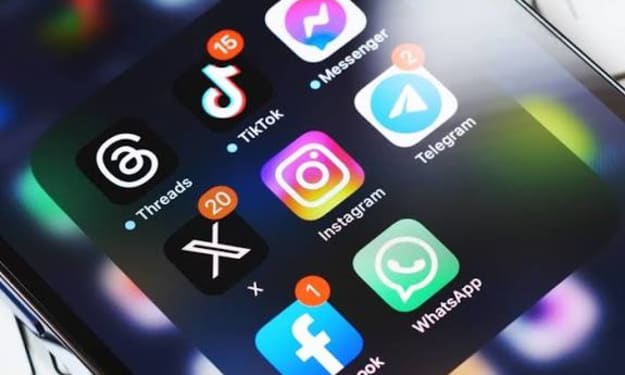
In 2026, leading social media companies shocked users and governments alike by announcing sweeping policy changes aimed at reshaping how online platforms operate. These reforms focus on user privacy, content moderation, artificial intelligence, and digital well-being. Companies such as Meta, X (formerly Twitter), Google-owned YouTube, and TikTok revealed new guidelines designed to respond to growing public criticism over misinformation, data misuse, and the mental health impact of social media. The policy changes come after years of pressure from regulators and civil society groups demanding greater accountability from tech corporations. Governments around the world have introduced stricter digital laws, forcing platforms to rethink how they manage user data and online content. The new policies mark one of the most significant shifts in the history of social media. One of the most important changes involves stronger content moderation rules. Social media giants announced they will use advanced artificial intelligence systems to detect harmful content such as hate speech, violent material, and misinformation more quickly. These systems will work alongside human review teams to ensure accuracy and fairness. Companies stated that their goal is to reduce the spread of false information without limiting freedom of expression. Critics, however, worry that automated moderation could still make mistakes and unfairly silence certain voices. Another major reform focuses on user privacy and data protection. Platforms have promised to give users more control over their personal information. New tools allow individuals to see exactly how their data is collected, stored, and used for advertising. Some companies have even announced plans to reduce targeted advertising for minors and limit tracking across different apps and websites. This shift reflects growing awareness about digital surveillance and the need for ethical data practices. Social media companies also introduced new policies to address mental health and digital addiction. Features such as automatic screen-time reminders, content filtering, and healthier algorithm designs aim to reduce overexposure to harmful material. Teen users will now see fewer posts related to extreme beauty standards or risky behavior. Experts believe these changes could improve emotional well-being and reduce anxiety and depression linked to excessive social media use. Another significant update is related to political and election-related content. Platforms have announced stricter rules for political advertising and clearer labeling of sponsored posts. Fact-checking partnerships with independent organizations will be expanded to reduce the spread of fake news during elections. This move follows criticism that social media companies failed to protect democratic processes in the past. Artificial intelligence plays a central role in the new policy framework. Social media giants will now label AI-generated images, videos, and text to prevent deception. Deepfake detection tools are being introduced to identify manipulated media that could be used for scams or propaganda. This is especially important as AI-generated content becomes more realistic and widespread. The business impact of these policy changes is also significant. Advertising strategies may shift as companies reduce data collection and focus on transparent marketing. Smaller businesses may benefit from clearer rules, while influencers and content creators will need to adapt to stricter guidelines. Some creators fear that increased moderation could affect their reach, while others welcome a safer and more respectful online environment. Public reaction has been mixed. Many users support stronger protections against harmful content and data misuse. Parents and educators especially praise the focus on youth safety. However, some activists argue that the changes do not go far enough and demand full transparency in how algorithms work. Free speech advocates worry about censorship, while privacy supporters insist that these reforms are long overdue. Technology experts say these policy shifts represent a turning point in the digital era. Social media platforms are no longer just entertainment tools; they are global communication systems with political, cultural, and economic power. With billions of users worldwide, their decisions shape public opinion and social behavior. Despite the positive intentions, challenges remain. Enforcing policies consistently across different countries with different laws and cultures is difficult. Balancing user rights with safety will continue to be a complex task. Companies must also invest heavily in technology and staff to make these reforms effective. In conclusion, the announcement of major policy changes by social media giants marks a new chapter in the evolution of the internet. By focusing on privacy, mental health, misinformation, and ethical AI, these platforms are attempting to rebuild public trust and create safer digital spaces. Whether these reforms succeed will depend on transparency, enforcement, and continued dialogue with users and governments. One thing is certain: social media in 2026 will not look the same as it did in the past, and these policy changes will shape the future of online communication for years to come.
By Fiaz Ahmed 3 days ago in Longevity
New Smartphone Technology Shocks the World. AI-Generated.
In 2026, the global technology industry was stunned by the release of revolutionary smartphone technology that redefined what a mobile device can do. What was once seen simply as a communication tool has now evolved into a powerful, intelligent companion capable of performing tasks that were unimaginable just a few years ago. From holographic displays to advanced artificial intelligence and ultra-fast charging systems, the latest smartphone innovations have shocked consumers, industry experts, and competitors alike. One of the most groundbreaking features of this new smartphone technology is the introduction of holographic and foldable display systems. Unlike traditional flat screens, these devices project three-dimensional visuals that appear to float above the screen. Users can interact with images, videos, and applications through hand gestures without touching the display. This advancement has transformed gaming, video conferencing, and education by making digital experiences more immersive and lifelike. Foldable screens have also reached new levels of durability, allowing phones to expand into tablet-sized devices while remaining thin and lightweight. Artificial intelligence has become the true brain of modern smartphones. The new generation of devices comes equipped with AI-powered personal assistants that understand emotions, predict user needs, and learn behavior patterns over time. These assistants can schedule appointments, manage finances, recommend health routines, and even hold meaningful conversations. Unlike earlier voice assistants, today’s AI systems respond naturally and adapt to individual lifestyles, making smartphones feel more human than ever before. Battery technology has also undergone a dramatic transformation. New smartphones now use solid-state batteries that charge in just minutes and last several days on a single charge. This innovation has solved one of the biggest problems users have faced for years—short battery life. In addition, wireless charging has become more powerful and efficient, allowing devices to recharge simply by being placed on any compatible surface. Some models even support solar-assisted charging, using sunlight to extend battery performance. Another shocking advancement is in camera and imaging technology. Smartphone cameras now rival professional photography equipment. With ultra-high resolution lenses, night-vision capabilities, and AI-enhanced editing, users can capture cinematic-quality photos and videos. Real-time translation and object recognition features allow the camera to identify landmarks, read foreign languages, and provide instant information. These tools have turned smartphones into portable research devices and creative studios. Security and privacy have reached a new level with the introduction of biometric and neural authentication systems. Instead of relying solely on fingerprints or facial recognition, smartphones can now verify users through heart rhythms, voice patterns, and even brainwave responses. This technology makes hacking nearly impossible and ensures that personal data remains protected. Governments and cybersecurity experts have praised these developments as a major step toward safer digital environments. Connectivity has also shocked the world with the full expansion of 6G network compatibility. These smartphones offer lightning-fast data speeds, allowing users to download large files in seconds and stream ultra-high-definition content without interruption. Real-time cloud computing enables phones to perform complex tasks such as video rendering and data analysis without overheating or slowing down. This has transformed smartphones into portable supercomputers. Health and wellness integration is another area where smartphone technology has surprised users. Built-in sensors can now monitor heart health, blood pressure, stress levels, and sleep quality continuously. Some devices can even detect early signs of illness and recommend medical checkups. These features have made smartphones essential tools for preventive healthcare and personal well-being. The impact of this new smartphone technology extends beyond individual users. Industries such as education, business, and entertainment are being reshaped. Virtual classrooms powered by holographic screens allow students to interact with teachers in real-time. Businesses use AI-driven phones for remote management and customer service. Artists and filmmakers create professional content using only smartphones, reducing the need for expensive equipment. Despite the excitement, experts also warn about challenges. The rapid pace of innovation raises concerns about digital addiction, data privacy, and economic inequality. Not everyone can afford these advanced devices, creating a gap between technology users. Governments and companies must work together to ensure responsible use and fair access. In conclusion, new smartphone technology has truly shocked the world by pushing the boundaries of innovation. With holographic displays, AI intelligence, powerful batteries, advanced security, and health monitoring, smartphones are no longer just communication tools—they are becoming essential life companions. As technology continues to evolve, these devices will shape how people work, learn, and connect with the world. The future of smartphones is not just smart—it is extraordinary.
By Fiaz Ahmed 3 days ago in Longevity
Finding Balance in an Unbalanced World
I had a panic attack in the grocery store checkout line. Nothing triggered it. No dramatic event. Just me, standing there with a cart full of organic vegetables and Pinterest-worthy meal prep ingredients, when suddenly I couldn't breathe.
By Fazal Hadi3 days ago in Longevity
Psychology Says People With Poor Social Skills Often Use These 9 Phrases in Everyday Conversation. AI-Generated.
Human communication is complex, and social skills play a crucial role in how people build relationships, resolve conflicts, and feel connected to others. Psychology suggests that individuals who struggle with social skills are not unintelligent or unkind; rather, they often lack confidence, emotional awareness, or experience in social settings. Their difficulties sometimes appear in the language they use during everyday conversations. Certain phrases can unintentionally signal insecurity, defensiveness, or discomfort. Understanding these patterns can help people recognize areas for personal growth and improve communication. It is important to note that using one or two of these phrases does not automatically mean someone has poor social skills. Everyone uses them occasionally. However, when these expressions become habitual, they may reflect deeper communication challenges. 1. “I don’t care.” This phrase often appears when someone feels overwhelmed or unsure how to respond. Psychologically, it can signal emotional withdrawal rather than true indifference. While the speaker may want to avoid conflict or judgment, others may interpret it as rude or dismissive. Over time, this can weaken relationships and make conversations feel one-sided. 2. “Whatever.” Similar to “I don’t care,” this phrase can come across as passive-aggressive. People with limited social skills may use it to escape uncomfortable discussions. Psychology suggests that this response blocks emotional connection and prevents healthy dialogue. Instead of resolving issues, it creates distance between speakers. 3. “That’s stupid.” Harsh judgments like this often reflect poor emotional regulation. Rather than expressing disagreement respectfully, the speaker attacks the idea or person. This phrase can shut down conversation and make others feel disrespected. Socially skilled communicators usually replace such statements with constructive feedback. 4. “I’m just being honest.” This phrase is frequently used to justify blunt or hurtful comments. Psychology explains that people who lack empathy awareness may confuse honesty with cruelty. True honesty can be expressed kindly, but this phrase is often used to avoid taking responsibility for how words affect others. 5. “Nobody cares.” This statement can reveal low self-esteem or fear of rejection. Individuals who feel socially insecure may assume their thoughts are unimportant. Ironically, repeating this phrase can push people away, even when others actually do care about what they have to say. 6. “You wouldn’t understand.” This phrase often reflects emotional defensiveness. Instead of explaining feelings or experiences, the speaker withdraws. Psychologists note that this limits intimacy and mutual understanding. Strong social skills involve trusting others enough to share thoughts clearly and openly. 7. “It’s not my fault.” Constantly avoiding responsibility is a common communication barrier. While everyone makes mistakes, repeatedly using this phrase suggests difficulty accepting accountability. This can damage trust and create tension in both personal and professional relationships. 8. “Why are you so sensitive?” This phrase dismisses another person’s emotions rather than acknowledging them. Psychology links this to low emotional intelligence. Socially skilled individuals validate feelings even when they disagree, but this phrase can make others feel misunderstood and unheard. 9. “I don’t know what to say.” This phrase shows discomfort in social interaction. It often appears when someone lacks confidence or fears saying the wrong thing. While honest, frequent use may signal limited conversational skills. Learning simple responses such as asking questions or expressing curiosity can greatly improve communication. Psychologists emphasize that poor social skills are not permanent traits. They are learned behaviors shaped by environment, upbringing, and past experiences. Many people who struggle socially have faced rejection, anxiety, or isolation, which influences how they speak. Language becomes a protective shield rather than a bridge to connection. Improving social communication begins with awareness. When individuals notice their own repeated phrases, they can consciously replace them with more positive and open expressions. For example, instead of saying “whatever,” one can say, “I see your point, but I feel differently.” Instead of “nobody cares,” a better option is, “I’m not sure how to explain this, but it matters to me.” Psychology also highlights the importance of active listening. Good social skills are not only about speaking well but also about understanding others. Maintaining eye contact, asking thoughtful questions, and showing empathy can transform conversations and relationships. In today’s digital age, social skills are more important than ever. Many people communicate through screens rather than face-to-face, which can weaken emotional awareness and tone recognition. Practicing respectful language and emotional sensitivity helps build stronger connections in both real life and online spaces. In conclusion, psychology shows that people with poor social skills often rely on certain phrases that unintentionally create distance or conflict. These nine expressions reveal insecurity, defensiveness, or lack of emotional awareness rather than bad intentions. With self-reflection and practice, anyone can improve their communication style. By choosing words more carefully and listening more deeply, individuals can build healthier relationships and become more confident communicators in everyday life.
By Fiaz Ahmed 3 days ago in Longevity
How to Avoid Looking Old-Fashioned Without Losing Who You Are
Growing older does not automatically mean becoming disconnected, rigid, or outdated. Yet many seniors share a quiet fear: appearing “old-fashioned.” Not because they are ashamed of their age, but because they sometimes feel a growing gap between themselves and a world that seems to be moving faster every year.
By Bubble Chill Media 3 days ago in Longevity
ChatGPT Evolution: How AI Changed the Internet Forever. AI-Generated.
The rise of artificial intelligence has transformed nearly every aspect of modern life, but few innovations have reshaped the internet as profoundly as ChatGPT. From its early beginnings as a simple conversational tool to becoming a powerful engine of knowledge, creativity, and automation, ChatGPT represents a turning point in how humans interact with technology. Its evolution has not only changed how people search for information but has also redefined communication, business, education, and digital culture itself.
By Fiaz Ahmed 3 days ago in Longevity