Latest Stories
Most recently published stories in Longevity.
New Smartphone Technology Shocks the World. AI-Generated.
In 2026, the global technology industry was stunned by the release of revolutionary smartphone technology that redefined what a mobile device can do. What was once seen simply as a communication tool has now evolved into a powerful, intelligent companion capable of performing tasks that were unimaginable just a few years ago. From holographic displays to advanced artificial intelligence and ultra-fast charging systems, the latest smartphone innovations have shocked consumers, industry experts, and competitors alike. One of the most groundbreaking features of this new smartphone technology is the introduction of holographic and foldable display systems. Unlike traditional flat screens, these devices project three-dimensional visuals that appear to float above the screen. Users can interact with images, videos, and applications through hand gestures without touching the display. This advancement has transformed gaming, video conferencing, and education by making digital experiences more immersive and lifelike. Foldable screens have also reached new levels of durability, allowing phones to expand into tablet-sized devices while remaining thin and lightweight. Artificial intelligence has become the true brain of modern smartphones. The new generation of devices comes equipped with AI-powered personal assistants that understand emotions, predict user needs, and learn behavior patterns over time. These assistants can schedule appointments, manage finances, recommend health routines, and even hold meaningful conversations. Unlike earlier voice assistants, today’s AI systems respond naturally and adapt to individual lifestyles, making smartphones feel more human than ever before. Battery technology has also undergone a dramatic transformation. New smartphones now use solid-state batteries that charge in just minutes and last several days on a single charge. This innovation has solved one of the biggest problems users have faced for years—short battery life. In addition, wireless charging has become more powerful and efficient, allowing devices to recharge simply by being placed on any compatible surface. Some models even support solar-assisted charging, using sunlight to extend battery performance. Another shocking advancement is in camera and imaging technology. Smartphone cameras now rival professional photography equipment. With ultra-high resolution lenses, night-vision capabilities, and AI-enhanced editing, users can capture cinematic-quality photos and videos. Real-time translation and object recognition features allow the camera to identify landmarks, read foreign languages, and provide instant information. These tools have turned smartphones into portable research devices and creative studios. Security and privacy have reached a new level with the introduction of biometric and neural authentication systems. Instead of relying solely on fingerprints or facial recognition, smartphones can now verify users through heart rhythms, voice patterns, and even brainwave responses. This technology makes hacking nearly impossible and ensures that personal data remains protected. Governments and cybersecurity experts have praised these developments as a major step toward safer digital environments. Connectivity has also shocked the world with the full expansion of 6G network compatibility. These smartphones offer lightning-fast data speeds, allowing users to download large files in seconds and stream ultra-high-definition content without interruption. Real-time cloud computing enables phones to perform complex tasks such as video rendering and data analysis without overheating or slowing down. This has transformed smartphones into portable supercomputers. Health and wellness integration is another area where smartphone technology has surprised users. Built-in sensors can now monitor heart health, blood pressure, stress levels, and sleep quality continuously. Some devices can even detect early signs of illness and recommend medical checkups. These features have made smartphones essential tools for preventive healthcare and personal well-being. The impact of this new smartphone technology extends beyond individual users. Industries such as education, business, and entertainment are being reshaped. Virtual classrooms powered by holographic screens allow students to interact with teachers in real-time. Businesses use AI-driven phones for remote management and customer service. Artists and filmmakers create professional content using only smartphones, reducing the need for expensive equipment. Despite the excitement, experts also warn about challenges. The rapid pace of innovation raises concerns about digital addiction, data privacy, and economic inequality. Not everyone can afford these advanced devices, creating a gap between technology users. Governments and companies must work together to ensure responsible use and fair access. In conclusion, new smartphone technology has truly shocked the world by pushing the boundaries of innovation. With holographic displays, AI intelligence, powerful batteries, advanced security, and health monitoring, smartphones are no longer just communication tools—they are becoming essential life companions. As technology continues to evolve, these devices will shape how people work, learn, and connect with the world. The future of smartphones is not just smart—it is extraordinary.
By Fiaz Ahmed 3 days ago in Longevity
Finding Balance in an Unbalanced World
I had a panic attack in the grocery store checkout line. Nothing triggered it. No dramatic event. Just me, standing there with a cart full of organic vegetables and Pinterest-worthy meal prep ingredients, when suddenly I couldn't breathe.
By Fazal Hadi3 days ago in Longevity
Psychology Says People With Poor Social Skills Often Use These 9 Phrases in Everyday Conversation. AI-Generated.
Human communication is complex, and social skills play a crucial role in how people build relationships, resolve conflicts, and feel connected to others. Psychology suggests that individuals who struggle with social skills are not unintelligent or unkind; rather, they often lack confidence, emotional awareness, or experience in social settings. Their difficulties sometimes appear in the language they use during everyday conversations. Certain phrases can unintentionally signal insecurity, defensiveness, or discomfort. Understanding these patterns can help people recognize areas for personal growth and improve communication. It is important to note that using one or two of these phrases does not automatically mean someone has poor social skills. Everyone uses them occasionally. However, when these expressions become habitual, they may reflect deeper communication challenges. 1. “I don’t care.” This phrase often appears when someone feels overwhelmed or unsure how to respond. Psychologically, it can signal emotional withdrawal rather than true indifference. While the speaker may want to avoid conflict or judgment, others may interpret it as rude or dismissive. Over time, this can weaken relationships and make conversations feel one-sided. 2. “Whatever.” Similar to “I don’t care,” this phrase can come across as passive-aggressive. People with limited social skills may use it to escape uncomfortable discussions. Psychology suggests that this response blocks emotional connection and prevents healthy dialogue. Instead of resolving issues, it creates distance between speakers. 3. “That’s stupid.” Harsh judgments like this often reflect poor emotional regulation. Rather than expressing disagreement respectfully, the speaker attacks the idea or person. This phrase can shut down conversation and make others feel disrespected. Socially skilled communicators usually replace such statements with constructive feedback. 4. “I’m just being honest.” This phrase is frequently used to justify blunt or hurtful comments. Psychology explains that people who lack empathy awareness may confuse honesty with cruelty. True honesty can be expressed kindly, but this phrase is often used to avoid taking responsibility for how words affect others. 5. “Nobody cares.” This statement can reveal low self-esteem or fear of rejection. Individuals who feel socially insecure may assume their thoughts are unimportant. Ironically, repeating this phrase can push people away, even when others actually do care about what they have to say. 6. “You wouldn’t understand.” This phrase often reflects emotional defensiveness. Instead of explaining feelings or experiences, the speaker withdraws. Psychologists note that this limits intimacy and mutual understanding. Strong social skills involve trusting others enough to share thoughts clearly and openly. 7. “It’s not my fault.” Constantly avoiding responsibility is a common communication barrier. While everyone makes mistakes, repeatedly using this phrase suggests difficulty accepting accountability. This can damage trust and create tension in both personal and professional relationships. 8. “Why are you so sensitive?” This phrase dismisses another person’s emotions rather than acknowledging them. Psychology links this to low emotional intelligence. Socially skilled individuals validate feelings even when they disagree, but this phrase can make others feel misunderstood and unheard. 9. “I don’t know what to say.” This phrase shows discomfort in social interaction. It often appears when someone lacks confidence or fears saying the wrong thing. While honest, frequent use may signal limited conversational skills. Learning simple responses such as asking questions or expressing curiosity can greatly improve communication. Psychologists emphasize that poor social skills are not permanent traits. They are learned behaviors shaped by environment, upbringing, and past experiences. Many people who struggle socially have faced rejection, anxiety, or isolation, which influences how they speak. Language becomes a protective shield rather than a bridge to connection. Improving social communication begins with awareness. When individuals notice their own repeated phrases, they can consciously replace them with more positive and open expressions. For example, instead of saying “whatever,” one can say, “I see your point, but I feel differently.” Instead of “nobody cares,” a better option is, “I’m not sure how to explain this, but it matters to me.” Psychology also highlights the importance of active listening. Good social skills are not only about speaking well but also about understanding others. Maintaining eye contact, asking thoughtful questions, and showing empathy can transform conversations and relationships. In today’s digital age, social skills are more important than ever. Many people communicate through screens rather than face-to-face, which can weaken emotional awareness and tone recognition. Practicing respectful language and emotional sensitivity helps build stronger connections in both real life and online spaces. In conclusion, psychology shows that people with poor social skills often rely on certain phrases that unintentionally create distance or conflict. These nine expressions reveal insecurity, defensiveness, or lack of emotional awareness rather than bad intentions. With self-reflection and practice, anyone can improve their communication style. By choosing words more carefully and listening more deeply, individuals can build healthier relationships and become more confident communicators in everyday life.
By Fiaz Ahmed 3 days ago in Longevity
How to Avoid Looking Old-Fashioned Without Losing Who You Are
Growing older does not automatically mean becoming disconnected, rigid, or outdated. Yet many seniors share a quiet fear: appearing “old-fashioned.” Not because they are ashamed of their age, but because they sometimes feel a growing gap between themselves and a world that seems to be moving faster every year.
By Bubble Chill Media 3 days ago in Longevity
ChatGPT Evolution: How AI Changed the Internet Forever. AI-Generated.
The rise of artificial intelligence has transformed nearly every aspect of modern life, but few innovations have reshaped the internet as profoundly as ChatGPT. From its early beginnings as a simple conversational tool to becoming a powerful engine of knowledge, creativity, and automation, ChatGPT represents a turning point in how humans interact with technology. Its evolution has not only changed how people search for information but has also redefined communication, business, education, and digital culture itself.
By Fiaz Ahmed 3 days ago in Longevity
Mental Health Crisis Grows Worldwide in 2026. AI-Generated.
The year 2026 has emerged as a critical turning point for global mental health, as countries across the world report a sharp rise in anxiety, depression, and stress-related disorders. Health experts warn that the mental health crisis is no longer limited to specific regions or age groups but has become a widespread global challenge affecting millions of people. Economic uncertainty, ongoing conflicts, climate anxiety, and the lasting effects of past pandemics have combined to create an environment of emotional strain and psychological vulnerability. According to international health organizations, cases of depression and anxiety disorders have increased significantly since the early 2020s, with 2026 showing the highest recorded numbers in many countries. Young people, in particular, are among the most affected. Academic pressure, unemployment, social media influence, and fear about the future have contributed to rising levels of stress and emotional exhaustion among teenagers and young adults. One of the main drivers of the mental health crisis is economic instability. Inflation, job insecurity, and rising living costs have placed enormous pressure on families and individuals. Many people struggle to meet basic needs, leading to feelings of hopelessness and fear. In developing countries, limited access to mental health services has worsened the situation, leaving millions without proper diagnosis or treatment. Global conflicts and political instability have also played a significant role in worsening mental health conditions. War zones and refugee communities experience high levels of trauma, grief, and post-traumatic stress disorder (PTSD). Displacement, loss of loved ones, and uncertainty about the future have created long-term psychological scars. Even in peaceful regions, constant exposure to distressing news through digital media has increased fear and emotional fatigue. Climate change has become another powerful contributor to mental distress. Extreme weather events such as floods, wildfires, and heatwaves are not only destroying homes and livelihoods but also affecting emotional well-being. A growing number of people report experiencing “climate anxiety,” a condition marked by fear and helplessness about environmental destruction and the planet’s future. Scientists note that young generations feel especially burdened by the responsibility of facing a crisis they did not create. Technology and social media, while offering connection and information, have also intensified mental health challenges. Excessive screen time, online comparison, cyberbullying, and unrealistic standards of success contribute to low self-esteem and isolation. Many individuals feel pressured to present perfect lives online while struggling privately with emotional pain. Mental health professionals warn that digital dependence can weaken real-life relationships and increase loneliness. Healthcare systems worldwide are struggling to keep up with the growing demand for mental health services. In many countries, there are not enough trained psychologists, psychiatrists, and counselors to treat patients. Long waiting times and high treatment costs prevent people from seeking help. Rural and low-income areas face even greater shortages, creating inequality in access to mental health care. Governments and international organizations are beginning to recognize the urgency of the crisis. In 2026, several countries have launched national mental health strategies focusing on early intervention, public awareness, and workplace mental wellness programs. Schools are introducing mental health education to help students understand stress management and emotional resilience. Employers are also being encouraged to provide counseling services and flexible work arrangements to support employee well-being. Public attitudes toward mental health are slowly changing. There is growing acceptance that mental illness should be treated with the same seriousness as physical illness. Celebrities, athletes, and public figures have spoken openly about their struggles, helping reduce stigma and encouraging others to seek help. Online platforms and mobile apps offering therapy and emotional support have become more popular, making mental health care more accessible for many people. Despite these positive developments, experts warn that much more needs to be done. Mental health funding remains insufficient in many regions, and cultural stigma still prevents individuals from discussing their struggles openly. Suicide rates in certain countries continue to rise, highlighting the urgent need for comprehensive prevention strategies and community-based support systems. The global mental health crisis of 2026 is a reminder that emotional well-being is closely linked to social, economic, and environmental conditions. Addressing the problem requires a collective effort from governments, healthcare providers, educational institutions, and families. Investment in mental health infrastructure, research, and awareness campaigns is essential to prevent long-term consequences. Looking ahead, specialists emphasize the importance of building resilience and promoting healthy lifestyles. Regular physical activity, balanced nutrition, digital detox, and strong social connections can play a key role in improving mental well-being. Communities must create safe spaces for dialogue, understanding, and compassion. As the world faces complex challenges in 2026, mental health has become one of the most pressing global issues. Recognizing the crisis and taking meaningful action will determine whether future generations inherit a society burdened by emotional suffering or one that prioritizes psychological health and human dignity. The path forward depends on unity, empathy, and sustained commitment to mental well-being across all nations.
By Fiaz Ahmed 3 days ago in Longevity
New Medical Technology Extends Human Life Expectancy. AI-Generated.
Advances in medical technology are reshaping the future of healthcare and redefining how long and how well people can live. In recent years, scientists and medical professionals have introduced groundbreaking innovations that are significantly extending human life expectancy. These developments are not only helping to prevent deadly diseases but are also improving quality of life for millions around the world. From artificial intelligence–driven diagnostics to gene therapy and regenerative medicine, the modern healthcare revolution is entering a new era of longevity. One of the most important contributors to increased life expectancy is early disease detection through advanced diagnostic technology. Artificial intelligence (AI) is now being used to analyze medical scans, blood tests, and genetic data with remarkable accuracy. AI-powered systems can identify signs of cancer, heart disease, and neurological disorders at much earlier stages than traditional methods. Early diagnosis allows doctors to begin treatment before diseases become life-threatening, significantly improving survival rates. Another major breakthrough lies in personalized medicine. Instead of using the same treatment approach for every patient, doctors can now tailor therapies based on an individual’s genetic profile. This approach ensures that medications and treatments are more effective and produce fewer side effects. Personalized cancer treatments, for example, target specific genetic mutations within tumors, leading to higher recovery rates and longer patient survival. Regenerative medicine has also emerged as a powerful force in extending human life. Stem cell therapy and tissue engineering are enabling the repair or replacement of damaged organs and tissues. Scientists have successfully grown human skin, cartilage, and even parts of organs in laboratories. These technologies offer hope to patients suffering from organ failure, spinal injuries, and degenerative diseases. Instead of relying solely on organ transplants, future patients may receive lab-grown tissues that match their own bodies, reducing rejection risks and increasing life expectancy. Wearable health technology has transformed preventive care and daily health monitoring. Smartwatches and health-tracking devices can now measure heart rate, blood oxygen levels, sleep patterns, and physical activity in real time. These devices alert users to potential health problems before they become serious. For example, irregular heart rhythms or dangerously low oxygen levels can be detected instantly, allowing users to seek medical help quickly. This continuous monitoring empowers individuals to take control of their health and prevent sudden medical emergencies. Robotic surgery is another innovation contributing to longer life expectancy. Surgical robots allow doctors to perform highly precise procedures with minimal invasion. Smaller incisions reduce blood loss, lower the risk of infection, and shorten recovery times. Patients who once faced long hospital stays can now return to normal life much faster. Robotic-assisted surgeries are especially effective in heart operations, cancer treatments, and complex neurological procedures. Gene editing technologies, such as CRISPR, have opened new possibilities in preventing inherited diseases. Scientists can now modify faulty genes responsible for conditions like sickle cell anemia, muscular dystrophy, and certain cancers. While still under strict ethical and regulatory review, gene therapy holds the promise of eliminating genetic disorders before they can cause serious harm. This could dramatically increase life expectancy for future generations. Vaccination technology has also advanced significantly. New vaccines are being developed faster and more efficiently using modern biotechnology. These vaccines protect against deadly viruses and emerging infections, preventing large-scale health crises. Improved immunization programs have already helped control diseases that once reduced life expectancy worldwide, such as measles, polio, and influenza. Mental health technology is also playing a growing role in overall longevity. Digital therapy platforms, AI counseling tools, and mobile mental health applications are helping individuals manage stress, anxiety, and depression. Since mental well-being is closely linked to physical health, these innovations contribute to longer and healthier lives by reducing suicide rates and stress-related illnesses. Despite these remarkable achievements, challenges remain. High costs of advanced medical technology limit access in many developing countries. Inequality in healthcare systems means that not everyone benefits equally from these innovations. Ethical questions also arise regarding genetic modification and life-extending technologies. Governments and medical institutions must ensure that these tools are used responsibly and made accessible to broader populations. Experts believe that the future of medicine will focus not only on extending life but also on improving the quality of those extra years. Living longer without good health offers little benefit, so the goal is to create healthier aging through technology, lifestyle changes, and preventive care. In conclusion, new medical technology is transforming human life expectancy in ways once thought impossible. Through AI diagnostics, regenerative medicine, gene therapy, robotic surgery, and digital health tools, people are living longer and healthier lives. While challenges of cost and ethics remain, the progress achieved so far signals a hopeful future. As innovation continues, humanity stands on the edge of a new medical era—one where longer life is not just a dream, but a scientific reality.
By Fiaz Ahmed 3 days ago in Longevity
Concierge Medicine Market Size and Forecast 2025–2033. AI-Generated.
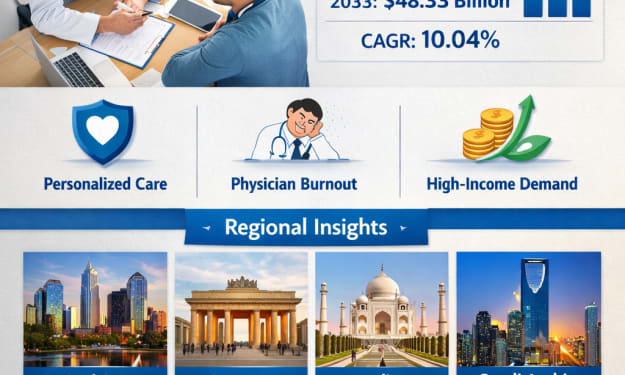
Concierge Medicine Market Outlook: A New Era of Personalized Care The global healthcare system is undergoing a profound transformation as patients increasingly seek care that is not only effective but also personal, accessible, and proactive. In this evolving landscape, concierge medicine has emerged as one of the fastest-growing healthcare models worldwide.
By Sakshi Sharma3 days ago in Longevity
Moltbook. AI-Generated.
In the fast-moving world of the internet, new terms often appear suddenly, spark curiosity, and then spread across search engines and social platforms. Moltbook is one such name. It has begun to surface in online discussions, prompting people to ask what it is, where it came from, and why it is gaining attention.
By Saboor Brohi 3 days ago in Longevity