Latest Stories
Most recently published stories in Longevity.
After Dumping Tonnes of Sand Into the Ocean for Over 12 Years, China Has Succeeded in Creating Entirely New Islands From Scratch. AI-Generated.
Over the past twelve years, China has carried out one of the most ambitious land reclamation projects in modern history, transforming submerged reefs and shallow waters into fully formed artificial islands. By dumping millions of tonnes of sand and construction material into the ocean, Beijing has reshaped parts of the South China Sea, creating new land where none previously existed. What began as a series of small dredging operations has evolved into strategically significant island installations equipped with runways, ports, radar systems, and military infrastructure. The project has drawn international attention and criticism, raising concerns about environmental damage, regional security, and the future of maritime law. Engineering New Geography Satellite images over the last decade reveal how reefs once barely visible above water have been turned into permanent land masses. Massive dredging vessels extract sand from the seabed and deposit it onto coral formations, layering material until solid ground emerges. Engineers then reinforce the new land with concrete, seawalls, and drainage systems to prevent erosion. On several islands, China has constructed airstrips long enough to accommodate military aircraft, along with harbors for naval vessels and buildings believed to house surveillance equipment. Experts say the scale of the project is unprecedented. “No country has altered maritime geography this extensively in such a short period of time,” said a maritime geographer. “These are not temporary structures. They are intended to last.” Strategic Importance The artificial islands sit in one of the world’s busiest shipping routes. The South China Sea carries trillions of dollars in global trade annually and is believed to hold significant oil and gas reserves. Control over this region offers both economic and military advantages. China claims historical rights over much of the sea, a position disputed by neighboring countries including Vietnam, the Philippines, Malaysia, and Brunei. An international tribunal in 2016 ruled that China’s sweeping claims had no legal basis under international maritime law, a decision Beijing rejected. By physically occupying contested areas, China has strengthened its presence and extended its operational reach. “These islands function as unsinkable aircraft carriers,” said a regional security analyst. “They allow China to project power far beyond its mainland coastline.” Environmental Consequences Scientists warn that the ecological cost has been severe. Coral reefs, which support diverse marine life, were destroyed during dredging operations. Sediment plumes from construction spread across nearby waters, damaging fish habitats and disrupting ecosystems. Marine biologists report long-term impacts on fisheries that local communities depend on for food and income. “You cannot rebuild coral once it’s buried under sand,” said an environmental researcher. “The damage could take centuries to recover, if at all.” China has stated that it follows environmental standards and that some construction included measures to protect reefs. However, independent studies suggest the scale of destruction is among the largest reef losses ever recorded. Regional Tensions Rise The island-building campaign has heightened tensions across Southeast Asia. Neighboring nations view the projects as violations of their territorial waters and accuse China of militarizing disputed zones. The United States and its allies have conducted freedom-of-navigation patrols near the artificial islands, arguing that international waters must remain open to all. These patrols have occasionally led to confrontations between Chinese and foreign naval vessels. Diplomats warn that the risk of miscalculation is growing. “Every new runway and radar station changes the balance of power,” said one foreign policy expert. “This is not just construction—it’s strategic messaging.” Legal and Political Debate Under international law, artificial islands do not generate the same maritime rights as natural land. They cannot claim exclusive economic zones or territorial seas. However, enforcing these rules has proven difficult. China maintains that the islands are primarily for civilian purposes such as weather monitoring, search-and-rescue operations, and maritime safety. Critics counter that military facilities dominate the structures and reveal Beijing’s long-term intentions. The issue has become a test of international legal norms in an era where engineering can physically reshape geography. A New Reality in the Ocean Today, what were once scattered reefs now appear on maps as fully formed islands with names, buildings, and airfields. They host personnel year-round and operate as forward bases for Chinese forces. For China, the islands symbolize technological capability and national strength. For its neighbors, they represent a permanent shift in the region’s power structure. “The ocean has been turned into land,” said a Southeast Asian diplomat. “And with that land comes influence.” Global Implications China’s island-building has inspired debate worldwide about the future of maritime disputes. Other nations with access to shallow seas may attempt similar projects, raising fears of widespread environmental damage and new territorial conflicts. Analysts argue that without stronger international agreements, artificial island construction could become a new tool of geopolitical competition. “This sets a precedent,” said a security researcher. “If geography can be engineered, borders become more fragile.” Conclusion After more than a decade of continuous dumping of sand and material into the sea, China has succeeded in creating entirely new islands from scratch—an achievement of engineering and a catalyst for controversy. The project has reshaped not only coral reefs but also regional politics, international law, and environmental priorities. As the islands become permanent fixtures in the South China Sea, the world is left to grapple with the consequences of turning ocean into territory. What was once water is now land—and that transformation may define future conflicts and cooperation in the Indo-Pacific for generations to come.
By Fiaz Ahmed 4 days ago in Longevity
Watch: Moment Bright Light Trail Streaks Across New Zealand Skyline. AI-Generated.
Residents across parts of New Zealand were left stunned after a brilliant streak of light suddenly cut across the night sky, lighting up the horizon and prompting a flood of social media videos and eyewitness reports. The mysterious spectacle, captured on mobile phones and security cameras, quickly went viral as people questioned whether the glowing trail was a meteor, space debris, or something else entirely. The event occurred shortly after nightfall, when skies were clear in many regions, allowing thousands to witness the phenomenon. In several cities and rural towns, the bright object appeared to travel silently before fading out within seconds. A Sky Full of Questions Witnesses described seeing a long, glowing trail moving rapidly across the sky, followed by a brief flash before disappearing. Some reported a greenish or bluish hue, while others noticed a white-hot streak that split into smaller fragments. “I thought it was fireworks at first,” said one Auckland resident. “But then it moved too fast and too smoothly. It looked like something from a science fiction movie.” Emergency services confirmed they received dozens of calls from concerned citizens asking if an aircraft had crashed or if an explosion had occurred. Authorities quickly reassured the public that there was no known danger or reported damage on the ground. What Experts Believe Happened Astronomers and space scientists later suggested the light trail was most likely caused by a meteor entering Earth’s atmosphere or re-entering space debris from a satellite or rocket stage. When such objects travel at extremely high speeds, friction with the atmosphere causes them to burn brightly, creating a fireball effect visible for hundreds of kilometers. According to experts, the brightness of the object indicates it may have been relatively large compared to typical shooting stars. “When something like this appears over a wide area and lasts several seconds, it’s often a fireball,” explained one astrophysicist. “It can be a natural meteor or occasionally a piece of human-made space debris returning to Earth.” Social Media Erupts Within minutes, videos of the glowing streak flooded social media platforms. Users posted clips showing the object racing across the skyline above cities, highways, and coastal areas. Some jokingly suggested it was an alien spacecraft, while others speculated about military activity or secret rocket launches. Hashtags related to the event quickly trended nationwide, and news outlets began compiling footage from eyewitnesses. The widespread documentation helped scientists analyze the object’s speed, color, and trajectory. Preliminary analysis suggests it entered the atmosphere at a steep angle and disintegrated before reaching the ground. No Immediate Threat Officials from New Zealand’s space and aviation authorities said there was no indication that the object posed any danger to aircraft or communities. No debris has been reported, and radar systems did not detect any large impact. Authorities urged the public not to panic and reminded citizens that such phenomena, while rare, are not unusual. “We see events like this several times a year worldwide,” a spokesperson said. “Most burn up completely before reaching the surface.” Why These Events Capture Attention Bright sky events often spark intense curiosity because they occur without warning and involve the unknown. For many people, it may be the first time they have ever seen a meteor fireball or space object re-enter the atmosphere. Scientists say the public reaction reflects a growing interest in space and astronomy. With more satellites in orbit and increased awareness of space exploration, people are more likely to question what they see overhead. “These moments remind us that Earth exists within a much larger cosmic environment,” said one science educator. “What looks mysterious is often part of natural or technological processes happening above us all the time.” A Teaching Moment for Science Schools and universities have already begun using the footage as an educational example of atmospheric entry and light phenomena. Teachers explain that when objects travel faster than sound and encounter Earth’s dense atmosphere, they heat up rapidly, creating visible trails. Some experts also pointed out that solar activity and seasonal meteor showers can increase the chances of such sightings. Although the exact source of the light has not yet been officially confirmed, most scientists agree it was either a meteor or controlled space debris re-entry. Community Reaction In small towns, residents gathered outside to discuss what they had seen. For some, the event was frightening; for others, it was thrilling. “I’ve lived here for 40 years and never seen anything like it,” said one rural observer. “It was beautiful and strange at the same time.” Several people described making wishes, while others worried about safety until authorities clarified the situation. Looking Ahead Astronomers are now reviewing satellite tracking data and meteor detection systems to determine the object’s origin more precisely. Results may take days to confirm, but experts say there is no cause for concern. As technology improves, scientists expect more of these events to be recorded and analyzed in detail, helping improve understanding of Earth’s interaction with space objects. For now, the bright streak across New Zealand’s skyline remains a memorable moment—an unexpected flash of wonder that briefly turned an ordinary night into a national conversation. The event serves as a reminder that even in an age of advanced science and constant connectivity, the sky can still surprise us.
By Fiaz Ahmed 4 days ago in Longevity
Rare Fungus Spotted for First Time in 50 Years. AI-Generated.
Scientists have confirmed the discovery of a rare fungus species that had not been seen in the wild for more than half a century, marking a major breakthrough in biodiversity research and conservation science. The fungus, believed to have vanished due to habitat loss and environmental changes, was found during a routine ecological survey in a remote forest region. Researchers described the find as “extraordinary,” noting that many species disappear quietly without ever being rediscovered. The reappearance of this fungus offers new hope for conservation efforts and raises important questions about what other organisms may still survive undetected. A Surprise Discovery The fungus was identified by a team of mycologists conducting a long-term study of forest ecosystems. While collecting soil and plant samples, researchers noticed unusual fruiting bodies growing on decaying tree bark. Laboratory analysis later confirmed it was the same species last recorded in the early 1970s. “It was completely unexpected,” said one of the lead scientists involved in the study. “We assumed this species was either extinct or extremely close to it. Finding it again shows how little we still know about fungal diversity.” The fungus is known for its distinctive pale coloring and fragile structure, which makes it difficult to detect. It only appears under very specific environmental conditions, including high humidity, stable temperatures, and the presence of certain tree species. Why It Disappeared Experts believe the fungus vanished from records due to deforestation, climate shifts, and pollution. Fungi are especially sensitive to changes in moisture and soil chemistry. Even small alterations in forest environments can disrupt their life cycles. In the decades following its last sighting, large areas of woodland were cleared for agriculture and development. The loss of old-growth trees removed the fungus’s natural habitat, making survival difficult. Climate change may have played a role as well. Warmer temperatures and unpredictable rainfall patterns likely reduced the narrow window in which the fungus could grow and reproduce. Importance to the Ecosystem Although small and easily overlooked, fungi play a critical role in ecosystems. They break down organic matter, recycle nutrients, and form symbiotic relationships with plants. This rare species is believed to help decompose specific types of hardwood, contributing to soil health and forest regeneration. “This fungus is part of a hidden network that supports entire ecosystems,” explained a forest ecologist. “Its return suggests the environment may be recovering in subtle ways.” Scientists are now studying the fungus’s genetic makeup to understand how it survived for so long undetected. Some believe it may have adapted to new conditions or retreated into isolated microhabitats. Conservation Implications The rediscovery highlights the importance of protecting remaining natural forests. Conservation groups argue that this finding proves even heavily impacted environments can still shelter rare life forms. Following the discovery, local authorities announced plans to limit logging and increase monitoring in the area. The site where the fungus was found will likely be designated a protected research zone. Environmental organizations welcomed the news but warned that protection must be long-term. “One rediscovery does not mean the species is safe,” said a conservation spokesperson. “It means we have been given a second chance.” A Growing Trend of Rediscoveries The fungus is not the only species to reappear after decades of absence. In recent years, scientists have rediscovered rare frogs, birds, and insects once thought extinct. Improved technology, satellite mapping, and DNA analysis have made it easier to identify species in hard-to-reach locations. However, experts caution that such success stories are rare compared to the number of species quietly disappearing each year. “Rediscoveries make headlines, but extinction happens every day without notice,” said a biodiversity researcher. “This is why protecting habitats is so urgent.” Public Interest and Scientific Curiosity News of the fungus’s return has sparked excitement among scientists and nature enthusiasts alike. Social media images of the tiny organism have circulated widely, drawing attention to fungi as an often-ignored part of biodiversity. Schools and universities are already discussing the discovery in biology classes as an example of resilience and the importance of field research. For scientists, the fungus offers a valuable opportunity to study long-term survival under environmental stress. Understanding how it endured decades of change could help researchers predict which species are most likely to survive future climate challenges. What Happens Next Researchers will continue to monitor the area over the coming months to see if more specimens appear. They plan to map its distribution and analyze soil and tree conditions to understand why it survived there. Strict guidelines have been issued to prevent tourists or collectors from disturbing the site. Scientists stress that human interference could easily destroy the fragile population. “This fungus survived half a century in silence,” said one researcher. “Our responsibility now is to make sure it does not disappear again.” A Symbol of Hope The rediscovery of the rare fungus serves as a powerful reminder that nature still holds secrets, even in a world shaped by human activity. It also underscores the need for patience, protection, and respect for ecosystems that operate beyond human notice. While many environmental stories focus on loss, this one offers a rare moment of hope. A species once thought gone has quietly returned, proving that life can persist even under the most challenging conditions. For scientists and conservationists, it is not just a scientific achievement—it is a call to safeguard what remains before more wonders vanish unseen.
By Fiaz Ahmed 4 days ago in Longevity
Why Do the Northern Lights Keep Appearing?. AI-Generated.
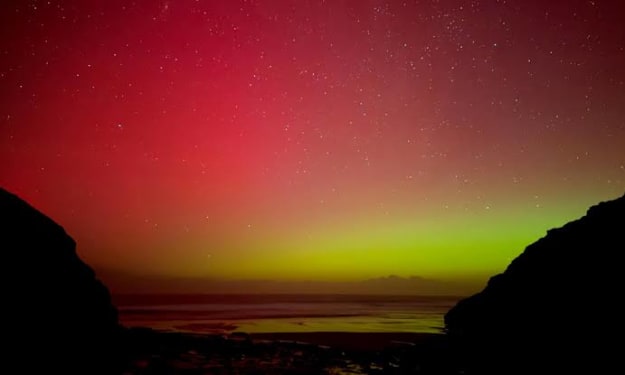
In recent months, the Northern Lights — also known as the aurora borealis — have been appearing more frequently and in places where they are rarely seen. From northern Europe and Canada to parts of the United States and even lower latitudes, skies have been glowing with vivid curtains of green, pink, and purple light. Scientists say this surge in aurora activity is not random. It is closely tied to changes in the Sun and Earth’s magnetic environment. The growing visibility of the Northern Lights has fascinated skywatchers while raising questions about what is happening in space above our planet. What Are the Northern Lights? The Northern Lights occur when charged particles from the Sun collide with gases in Earth’s atmosphere. These particles are carried toward Earth by solar wind and guided by the planet’s magnetic field toward the polar regions. When they strike oxygen and nitrogen molecules high in the atmosphere, energy is released in the form of light. Different gases produce different colors. Oxygen creates green and red light, while nitrogen produces blue and purple hues. The shimmering patterns are shaped by Earth’s magnetic field lines and the movement of solar particles. Under normal conditions, auroras are mostly visible near the Arctic Circle. But during periods of intense solar activity, they can be seen much farther south. The Role of the Sun’s Activity Cycle The primary reason the Northern Lights have been appearing more often is the Sun’s natural 11-year solar cycle. The Sun goes through periods of low and high activity, known as solar minimum and solar maximum. During solar maximum, the Sun produces more sunspots, solar flares, and coronal mass ejections (CMEs). Currently, the Sun is approaching or entering a phase of heightened activity. This means it is releasing stronger bursts of charged particles into space more frequently. When these particles reach Earth, they interact with the magnetosphere and intensify auroral displays. Scientists say this cycle explains why auroras have become brighter and more common over the past year. Solar Storms and Geomagnetic Disturbances Large solar eruptions, especially coronal mass ejections, can cause powerful geomagnetic storms when they strike Earth’s magnetic field. These storms compress and disturb the magnetosphere, allowing more solar particles to penetrate the atmosphere. During such events, auroras can spread across much wider areas than usual. This is why people in regions like the northern United States, the UK, Germany, and even parts of southern Europe have reported seeing the lights recently. While these storms are visually stunning, they can also disrupt satellites, radio communications, and power grids if they become strong enough. Why They Seem More Frequent Now There are several reasons people feel the Northern Lights are appearing more often: Increased solar activity – The Sun is entering a more active phase of its cycle. Better monitoring technology – Satellites now track solar storms more accurately and alert the public when auroras are likely. Social media exposure – Stunning images shared online make auroras feel more frequent and widespread. Clearer skies in some regions – Reduced air pollution in certain areas has made night skies more visible. Together, these factors have created the impression of constant aurora events. Are the Northern Lights Dangerous? For most people on Earth’s surface, auroras are harmless. They occur high above the ground, usually more than 100 kilometers above the surface. However, strong solar storms associated with intense auroras can affect modern technology. Airlines sometimes reroute flights away from polar regions during major solar events to avoid radiation exposure and communication disruptions. Power companies also take precautions to protect electrical grids from geomagnetic interference. Scientists stress that while solar storms can be disruptive, they are a natural part of space weather and are carefully monitored. What This Means for the Future Experts predict that auroral activity will remain strong for the next few years as the Sun continues through its active phase. This means more opportunities for people outside polar regions to witness the Northern Lights. Astronomers and space agencies are using this period to study how solar activity affects Earth’s atmosphere and technology. Understanding these interactions is becoming increasingly important as humanity relies more heavily on satellites, GPS systems, and global communications networks. Some researchers also see this as a reminder of how closely Earth is connected to space. The glowing skies are not just beautiful displays — they are visible evidence of powerful forces shaping our planet from 150 million kilometers away. A Rare Gift of Nature For many, the repeated appearance of the Northern Lights has been a rare gift. Communities that never expected to see auroras have gathered at night to watch the skies in awe. The phenomenon has sparked renewed interest in astronomy and space science among the public. Despite modern explanations, the Northern Lights still carry a sense of mystery. Ancient cultures believed they were spirits, gods, or messages from the heavens. Today, science has revealed their true origin, but the emotional impact remains the same. As long as the Sun continues its cycles of activity, the Northern Lights will keep returning — reminding humanity that even in an age of technology, nature still has the power to surprise and inspire.
By Fiaz Ahmed 4 days ago in Longevity
When Parents Feel Alone and Adult Kids Feel Overwhelmed
Being an adult these days is really busy. Our jobs take up a lot of time we spend a lot of time traveling to and from work. We have other things we do on the side that take up our weekends. On top of all that we have a lot of family things to take care of. Aging parents are often very lonely even if we do not forget about them. The thing is, we just do not have a lot of time for aging parents anymore. Time is very scarce, for everyone, including our aging parents.
By Live Peace5 days ago in Longevity
Why Life Gets Better After 50
If you think about life as a picture of how happy people are we have always thought it looks like a hill that goes up and then comes down. You start out when you are young and things get better and better you reach the top when you are in the middle of your life. Then it starts to get worse and worse as you get older.. What if we have been looking at this picture the wrong way? Some new research about how people think and feel is showing us that it is actually shaped like a U. When people are in the middle of their life they are often very busy and stressed out and they are not as happy as they used to be. But then something unexpected happens people start to get happier after they turn 50 and they just keep getting happier and happier. Life is, like a U shape happiness goes down. Then it comes back up again and that is what the research is showing us about life and happiness. This isn’t about denying the very real challenges of aging, but about uncovering the profound psychological shifts that make this chapter uniquely satisfying. Here’s the science and soul behind why contentment so often blooms in later life.
By Live Peace5 days ago in Longevity
Paul George. AI-Generated.
Paul George has spent more than a decade building a reputation as one of the NBA’s most complete two-way stars. From his early breakout years to his veteran leadership today, his career has been defined by elite scoring, defensive versatility, and resilience after serious injury. Yet in recent weeks, Paul George news across search engines and social platforms has been dominated not by box scores, but by a wave of confusing and often misleading questions: why was Paul George suspended, what drug did Paul George take, and why is Paul George suspended.
By Saboor Brohi 5 days ago in Longevity
Why I Go to Physical Therapy Every Week Even Though It Wrecks My Schedule
Nobody wants to hear this, but I'm going to say it anyway. I go to physical every single week. Not because I'm injured. Not because something is broken. Not because a doctor told me I had to.
By Destiny S. Harris5 days ago in Longevity
How Salt Bricks Clean the Lungs of Smokers in Sauna Walls
Smoking brings thousands of harmful chemicals into the organism, many of which are deposited in the lungs. With time, these particles accumulate resulting in chronic bronchitis, emphysema and increased chances of lung cancer. Although stopping smoking is the most crucial measure towards the health of a smoker, other treatments can also be used to hasten the removal of accumulated debris in the body and also to decrease swelling.
By Emily Rosie5 days ago in Longevity