
THE 2000 SYDNEY OLYMPICS AND CATHY FREEMAN'S TRIUMPH
Unity,Reconciliation,and the Power of Sporting Excellence.

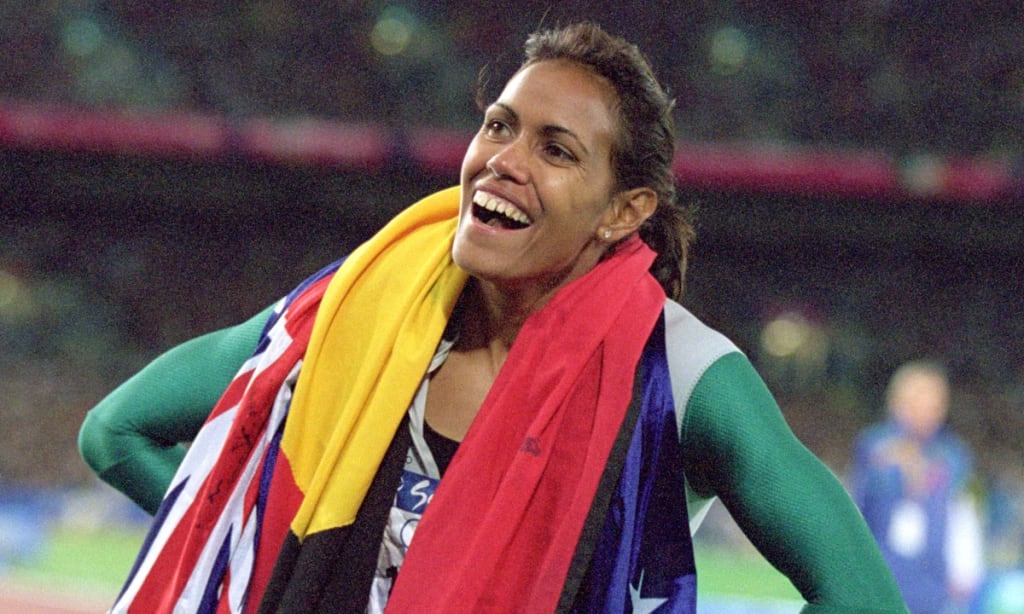
The 2000 Sydney Olympics stand as a defining moment in Olympic history, celebrated for their outstanding organization, vibrant cultural showcase, and memorable athletic performances. Among the most iconic moments was Cathy Freeman’s victory in the women’s 400-meter final. Freeman, an Indigenous Australian, became a symbol of unity and reconciliation in her home country, delivering a triumph that resonated far beyond the sporting arena. These Games demonstrated how the Olympics can transcend athletics to promote cultural understanding and national pride.
The Context: A Nation Welcomes the World
Sydney won the bid to host the 2000 Olympics in 1993, defeating Beijing in a closely contested vote. Australia, having last hosted the Games in Melbourne in 1956, was eager to showcase its modernity, natural beauty, and multicultural identity. The Sydney Olympics became known as the "Green Games" due to their emphasis on environmental sustainability, with initiatives like the use of solar energy and eco-friendly construction materials in venues.
The Games, held from September 15 to October 1, 2000, featured over 10,000 athletes from 199 nations competing in 300 events. The opening ceremony, a dazzling spectacle, celebrated Australia’s rich history, Indigenous culture, and natural wonders, setting the tone for what would become one of the most memorable Olympics in history.
Cathy Freeman: A Symbol of Hope and Reconciliation
Cathy Freeman entered the Sydney Olympics as one of Australia’s brightest stars and a favorite to win gold in the 400 meters. Beyond her athletic prowess, Freeman carried immense symbolic weight. As an Indigenous Australian, she represented a marginalized community that had long faced discrimination and inequity. Her role as a torchbearer during the opening ceremony, where she lit the Olympic cauldron, signified her importance as a unifying figure in Australian society.
Freeman’s path to the 400-meter final was marked by immense pressure and expectation. The weight of representing her country, coupled with the significance of her Indigenous heritage, made her journey both inspiring and challenging. She had already won a silver medal at the 1996 Atlanta Olympics and was determined to claim gold on home soil.
The 400-Meter Final: A Moment of Glory
On September 25, 2000, Cathy Freeman stepped onto the track for the women’s 400-meter final, with millions watching around the world. Wearing her now-iconic green and gold bodysuit, she exuded calm determination as she prepared to face her competitors.
The race itself was electrifying. Freeman started strong and maintained her composure through the first 300 meters, staying in close contention with her rivals. In the final stretch, she surged ahead, crossing the finish line in 49.11 seconds to claim the gold medal. As she completed her victory lap, draped in both the Australian and Aboriginal flags, the crowd erupted in applause, and the moment became a unifying symbol for the nation.
The Significance of Freeman’s Victory
Cathy Freeman’s triumph was about more than just athletic excellence. It symbolized reconciliation and unity in a country grappling with its colonial past and the marginalization of Indigenous peoples. Her decision to carry the Aboriginal flag during her victory lap was a powerful statement of pride and identity, celebrating her heritage on the world stage.
Her victory also highlighted the power of sports to bring people together. Freeman’s achievement resonated with Australians of all backgrounds, creating a shared sense of pride and possibility. It showcased how the Olympics can transcend competition, fostering understanding and dialogue about important social issues.
Other Memorable Moments at the 2000 Sydney Olympics
While Cathy Freeman’s victory was the highlight, the Sydney Olympics featured numerous other memorable moments:
(I)Ian Thorpe: The Australian swimmer, nicknamed "The Thorpedo," won three gold and two silver medals, becoming a national hero and one of the standout performers of the Games.
(II)Marion Jones: The American sprinter initially dazzled with three gold medals, but her achievements were later overshadowed by revelations of doping.
(III)Eric "The Eel" Moussambani: The swimmer from Equatorial Guinea captured hearts with his determination, despite struggling to complete his 100-meter freestyle heat in over two minutes.
(IV)Historic Firsts: The Games saw the debut of women’s pole vault and triathlon, as well as the inclusion of Taekwondo as an official Olympic sport.
The Legacy of the Sydney Olympics
The 2000 Sydney Olympics are often hailed as one of the best-organized Games in modern history. They set a new standard for operational excellence, with smooth logistics, enthusiastic volunteers, and state-of-the-art facilities. The event showcased Sydney as a world-class city and boosted Australia’s global reputation.
Cathy Freeman’s victory became a lasting symbol of the Games’ cultural impact. Her achievement inspired a new generation of Indigenous athletes and highlighted the importance of representation and inclusivity in sports. The reconciliation narrative surrounding Freeman’s triumph remains a significant part of Australian history, contributing to ongoing discussions about Indigenous rights and identity.
The Sydney Olympics also left a strong environmental legacy. The venues, including Stadium Australia and the Sydney Olympic Park, were designed with sustainability in mind and continue to serve as valuable community and sporting facilities.
Challenges and Criticisms
Despite their success, the Sydney Olympics were not without challenges. The high cost of hosting the Games—estimated at over $6 billion—sparked debates about the financial burden on taxpayers. Additionally, some critics argued that the focus on Indigenous reconciliation during the Games overshadowed the need for substantive policy changes to address systemic inequities.
Conclusion
The 2000 Sydney Olympics stand as a landmark event in Olympic and Australian history, remembered for their flawless execution and powerful cultural moments. Cathy Freeman’s triumph in the 400-meter final symbolized hope, unity, and reconciliation, capturing the spirit of the Games and inspiring millions worldwide. The legacy of the Sydney Olympics lives on, not only in its lasting infrastructure but also in the stories of resilience and unity that defined the event. Freeman’s victory remains a testament to the transformative power of sports, demonstrating how the Olympics can inspire progress and bring people together on a global stage.
About the Creator
Badhan Sen
Myself Badhan, I am a professional writer.I like to share some stories with my friends.
Keep reading
More stories from Badhan Sen and writers in Unbalanced and other communities.
THE 2008 BEIJING OLYMPICS AND CHINA'S GLOBAL RISE
The 2008 Beijing Olympics marked a pivotal moment in both the history of the Olympic Games and in China's ascension as a global power. Held from August 8 to August 24, 2008, the Games were more than just an international sporting event—they were a statement of China’s growing influence on the world stage. For the Chinese government, the Olympics provided an opportunity to showcase the country’s economic and political achievements, its rich cultural heritage, and its increasing role in global affairs. However, the Games were also a focal point for criticism and protests, as various groups raised concerns about human rights, political freedoms, and China's global image.
By Badhan Senabout a year ago in Unbalanced
Super Bowl LX Recap: A Team Called Hawks
Sixty. The Super Bowl turned 60! Still amazes me that this was the sixtieth Super Bowl played in NFL history. It seems like yesterday that I watched Super Bowl XXVII, the first SB I ever watched. The QB who won Super Bowl XXVII has since called a few SBs, and will call next year's game, but that's another story. Super Bowl LX took place at Levi's Stadium in Santa Clara, California, the home stadium of the San Francisco 49ers. However, it was one of their division foes who represented the NFC, as the Seattle Seahawks faced off against the New England Patriots.
By Clyde E. Dawkins3 days ago in Unbalanced
2026 Winter Olympics Ice Hockey
Ice hockey has long been one of the defining events of the Winter Olympic Games, combining speed, strategy, and national pride in a way few other sports can match. As the world turns its attention to the 2026 Winter Olympics in Milan and Cortina d’Ampezzo, ice hockey is once again expected to take center stage. With historic rivalries, emerging talent, and the possibility of top professional players competing, the tournament promises to be one of the most compelling chapters in Olympic hockey history.
By Saboor Brohi about 23 hours ago in Unbalanced




Comments (1)
Great article. I remember watching this from the opening to the closing ceremonies not missing a beat.